
November 3rd, 2026
University of Cambridge, UK
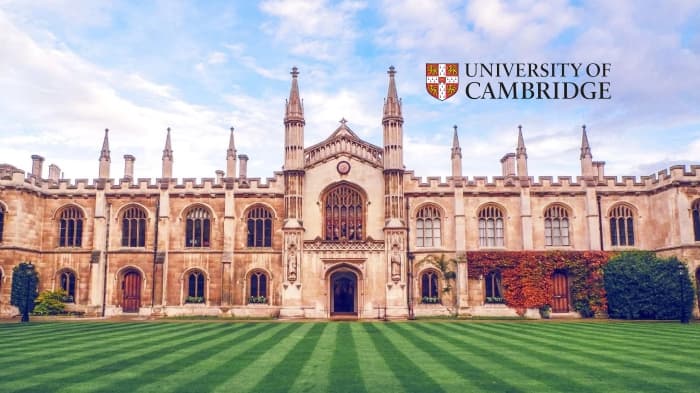
The University of Cambridge, established in 1209, represents the third-oldest surviving university globally and occupies an foundational position in Western intellectual history. Across more than eight centuries, the institution has fostered paradigm-shifting breakthroughs in scientific theory, philosophical discourse, and socio-economic governance. Building on this legacy of academic rigor, Cambridge Judge Business School (CJBS) was founded in 1990—endowed in substantial part by Sir Paul Judge—to institutionalize management education, corporate finance, and commercial innovation within the traditional university framework.
Operating within Cambridge’s historic collegiate system, CJBS bridges traditional academic scholarship and modern commercial application. The business school is embedded in the collegiate ecosystem of 31 autonomous Colleges, allowing business students to interact daily with researchers, fellows, and leaders across pure mathematics, engineering, biophysics, and international law. This positioning is further strengthened by its geographic location in the Cambridge Cluster, widely termed Silicon Fen. As Europe’s most productive technological innovation corridor, Silicon Fen provides a living laboratory for early-stage commercialization, intellectual property deployment, and enterprise scaling. The educational methodology at Cambridge reflects this confluence, training senior executives to navigate volatile commercial environments using fundamental analytical frameworks, multidisciplinary perspectives, and collaborative leadership methodologies.
About the Executive MBA Programs
The Cambridge executive mba programs delivered by Cambridge Judge Business School are structured for senior corporate figures, enterprise directors, and experienced technical practitioners who require an advanced management education without taking a career hiatus. The school offers two operational streams: the Cambridge Executive MBA and the Global Executive MBA. Both tracks lead to the identical University of Cambridge Master of Business Administration degree, adhere to uniform grading and governance standards, and are taught by the same resident faculty.
The curriculum covers five terms of integrated business study, progressing from quantitative analytics to enterprise governance. In the initial terms, candidates master fundamental analytical toolkits spanning Corporate Finance, Financial Reporting and Analysis, Management Praxis, and Business Analytics. The educational progression subsequently broadens into macro-level functional mastery, encompassing International Business, Macroeconomics, Marketing Management, and Operations Management. The latter half of the program introduces Strategic Management, Innovation Management, and Corporate Governance & Ethics alongside specialized elective sequences.
Applied experiential projects form the pedagogical core of both executive tracks. Through the Individual Project, candidates conduct an empirical investigation or deliver a strategic blueprint focused directly on an internal operational challenge within their sponsoring enterprise, supervised by Cambridge faculty. Concurrently, the Team Consulting Project requires cohorts of executives from diverse sectors to act as external management consultants to multinational corporations, nongovernmental organizations, or high-growth tech ventures. These projects allow candidates to test theoretical models against real-time operational pressures and market dynamics.
Important Dates & Intakes
Admissions for the executive tracks follow a staged evaluation system. Prospective participants are evaluated in distinct rounds across the calendar year, enabling the admissions committee to curate balanced, globally representative cohorts while allowing applicants time to secure employer support, arrange funding, and complete collegiate affiliation.
The Cambridge Executive MBA matriculates a single cohort annually in September, whereas the Global Executive MBA enrolls its cohort in January. For comparison, the full-time Cambridge MBA operates on five separate evaluation cycles terminating prior to its single September start date.
| Program Track | Intake Month | Round 1 Deadline | Round 2 Deadline | Round 3 Deadline | Round 4 Deadline | Round 5 Deadline |
|---|---|---|---|---|---|---|
| Cambridge Executive MBA | September | 10 November | 19 January | 02 March | 15 April | 05 August / 23 September |
| Global Executive MBA | January | 03 March | 16 April | 04 June | 13 August | 24 September |
| Full-Time Cambridge MBA | September | 24 August | 05 October | 04 January | 22 March | 04 May |
For early rounds of both executive programs, the admissions office typically conveys interview shortlisting decisions within two weeks of round closure, followed by conditional offers within a week post-interview. For candidates seeking entry to the one-year residential MBA, the admissions calendar adheres to the standardized Cambridge mba application deadline structure, processing submissions in three-week review intervals.
Global Recognition
Cambridge Judge Business School and the University of Cambridge consistently place among the highest tier of international academic and business school evaluations. In the Research Excellence Framework (REF) conducted by the UK higher education funding bodies, Cambridge Judge was ranked first nationwide for Business and Management Studies, underscoring the school's high concentration of world-leading business research and influential faculty publications.
This research capability translates into executive education rankings. The Financial Times ranked the Cambridge Executive MBA 20th globally in its comprehensive audit of global EMBA programs, noting its performance in post-graduation salary progression, executive diversity, and environmental, social, and governance (ESG) curriculum integration. In complementary degree evaluations, the QS Global MBA Rankings placed the full-time Cambridge MBA first in Europe and fifth globally, while the Financial Times recognized it as the top one-year MBA within the United Kingdom. Furthermore, the school's specialized post-experience Master of Finance (MFin) is ranked second globally by the Financial Times, illustrating the faculty's collective strength in quantitative finance and asset pricing.
Executive Programs: Duration & Fee Structure
The Cambridge executive mba duration is set at 20 months for both the in-person and blended delivery tracks. This multi-year timeline allows working executives to absorb advanced academic frameworks, apply strategic principles directly within their ongoing enterprise operations, and execute major consulting and research projects without taking an extended professional leave of absence.
Tuition covers academic instruction, administrative institutional infrastructure, lifelong membership in an assigned Cambridge College, formal matriculation fees, instructional materials, and all lodging and meals during Orientation Week and the required International Business Study Trips. Incidentals such as intercontinental transit to residential modules, personal study equipment, and individual visa charges remain the personal responsibility of the student.
By comparison, the standard residential Cambridge mba fees for full-time candidates stand at £86,250 with a £165 processing fee. The tuition differentials reflect the modular, executive-tailored logistics, corporate residencies, and dedicated leadership coaching services intrinsic to the executive programs.
| Program Metric / Attribute | Cambridge Executive MBA | Global Executive MBA | Full-Time Cambridge MBA |
|---|---|---|---|
| Duration | 20 Months | 20 Months | 12 Months |
| Instructional Delivery Model | In-Person (16 Weekends + 4 Week-Long Blocks) | Blended (33 Live Online Half-Days + 6 Week-Long Residencies) | Residential Full-Time |
| Total Program Fee | £110,400 | £107,400 | £86,250 |
| Application Processing Fee | £150 | £150 | £165 |
| Seat Reservation Deposit | £10,000 | £10,000 | Required upon offer acceptance |
| Single Payment Plan (Net of Deposit) | £100,400 due by early August | £97,400 due by early December | Single institutional sum |
| Split Installment Plan 1 | £56,240 due Year 1 | £54,440 due Year 1 | Standard staged university terms |
| Split Installment Plan 2 | £44,160 due Year 2 | £42,960 due Year 2 | Not applicable |
| Estimated Incidental Study / Travel Costs | £7,000 average over 20 months | £7,000 average over 20 months | £20,700 annual living estimate |
Securing an offer requires the immediate settlement of a non-refundable reservation deposit of £10,000, which is deducted directly from the candidate’s first-year tuition liability.
| Program Name | Duration | Fees | Mode |
|---|---|---|---|
| Strategic Customer Experience (CX): Data-Driven Decision-Making | 8 weeks | £2,350 | Online |
| Designing Human–AI Systems | 8 weeks | £2,350 | Online |
| Leveraging Big Data for Business Intelligence | 6 weeks | £2,200 | Online |
| Managing Software Architecture | 8 weeks | £2,350 | Online |
| Strategic Risk Management in the Age of AI | 6 weeks | £2,200 | Online |
| Semiconductors: New Technologies and the Value Chain | 6 weeks | £2,200 | Online |
| Generative AI in the Software Development Lifecycle | 6 weeks | £2,200 | Online |
| Responsible AI for Leaders | 6 weeks | £2,200 | Online |
| Roadmapping for Strategy and Innovation | 2 weeks | £2,200 | Online |
| A Practical Introduction to Large Language Models (LLMs) | 7 weeks | £415 | Online |
| Ethical AI: AI Essentials for Everyone | 7 weeks | £415 | Online |
| Data Science With Machine Learning & AI Career Accelerator | 7 months | £8,395 | Online |
| Cybersecurity Strategy & Leadership Accelerator | 6 months | £6,695 | Online |
| Digital Wellbeing and Productivity | 6 weeks | $59 | Online |
| Reconfiguring Global Supply Chains: Strategy Tools for Network Design | 4 sessions over 2 weeks | £1,900 | Online |
| The AI Leader: From Strategy to Transformation | 26 weeks | £8,500 | Online |
| Business and Climate Change: Towards Net Zero Emissions | 8 weeks | £2,350 | Online |
| Business Sustainability Management | 8 weeks | £2,350 | Online |
| Sustainable Finance: Leading Capital and Investment Strategies | 8 weeks | £2,350 | Online |
| Sustainable Business and Finance Bundle | 16 weeks | £4,700 | Online |
| Sustainable Business Operations Bundle | 16 weeks | £4,700 | Online |
| Sustainable Marketing and Communication Strategy Bundle | 24 weeks | £7,050 | Online |
| Generative AI in Business | 6 weeks | £2,200 | Online |
| Intercultural Communication for Global Business | 8 weeks | £2,200 | Online |
| Product-Technology Roadmapping | 6 weeks | £2,300 | Online |
| Creativity, Problem-Solving and Design Thinking | 6 weeks | £2,200 | Online |
| Executive AI Strategy | 4 weeks | £2,700 | Online |
| Business Analytics and AI: Decision-Making Using Data | 8 weeks | £2,200 | Online |
| Sustainable Business Foundations | 8 hours | £139 | Online |
| Sustainable Finance Foundations: Banking, Investment and Insurance | 8 hours | £139 | Online |
| Researcher to Innovator and Entrepreneur | 8 weeks | $249 | Online |
| Foundations of Finance | 5 weeks | $299 | Online |
| Financial Accounting and Capital Markets | 5 weeks | $299 | Online |
| Foundations of Corporate Finance | 5 weeks | $299 | Online |
| Professional Presentation Skills | 24 hours | £399 | Online |
| Critical Thinking Skills | 24 hours | £399 | Online |
| Generative AI Fundamentals | 24 hours | £449 | Online |
| Business Essentials for Workplace Readiness | 24 hours | £499 | Online |
| Advanced Customer Analytics: Strategic and Predictive Insights | 6 weeks | £2,200 | Online |
| Digital Supply Chain Short Course: Developing Next-Generation Digital Supply Chains | 2 days over 4 weeks | £1,000 | Online |
| Postgraduate Certificate in Sustainable Business (PCSB) | 9 months | £8,346 | Online |
| Law and Genetics | 7 weeks | £415 | Online |
| The Law of England and Wales: An Introduction | 7 weeks | £415 | Online |
| Financial Decision-Making in Practice | 7 weeks | £415 | Online |
| Understanding Finance in Organisations | 7 weeks | £415 | Online |
| Essential Finance | 7 weeks | £415 | Online |
| Demystifying Diversity | 7 weeks | £415 | Online |
| Executive Coaching | 7 weeks | £625 | Online |
| Certificate in Strategic Business and Management | 9 months | £4,100 | Online |
| Certificate in Entrepreneurship | 9 months | £4,100 | Online |
| Sustainable Marketing, Communications and Brand Management | 8 weeks | £2,350 | Online |
| Sustainable Marketing Foundations | 8 hours | £139 | Online |
| Building Your Screenplay | 4 weeks | $299 | Online |
| Stand Up: Comedy Writing and Performance Poetry | 4 weeks | $299 | Online |
| Finding Your Voice as a Playwright | 4 weeks | $299 | Online |
| Writing Successfully for the Stage | 4 weeks | $299 | Online |
| Digital Platforms in Performance | 4 weeks | $299 | Online |
| Business Success in the Screen Industries | 4 weeks | $299 | Online |
| User Experience Design | 7 weeks | £415 | Online |
| Blogging and Writing for Online Audiences | 7 weeks | £525 | Online |
| Copywriting: Getting Started | 7 weeks | £525 | Online |
| Creative Writing: An Introduction to Non-Fiction Nature Writing | 7 weeks | £525 | Online |
| Creative Writing: An Introduction to Writing Creative Non-Fiction | 7 weeks | £525 | Online |
| Popular Science Writing | 7 weeks | £525 | Online |
| Adventures in Fiction Writing | 7 weeks | £525 | Online |
| Creative Approaches to Scientific Storytelling | 7 weeks | £525 | Online |
| Creative Writing: Telling Your Family Story | 7 weeks | £525 | Online |
| Creative Writing: An Introduction to Writing Comic Fiction | 7 weeks | £525 | Online |
| An Introduction to Songwriting | 7 weeks | £525 | Online |
| Creative Writing: An Introduction to Writing for Children | 7 weeks | £525 | Online |
| Creative Writing: An Introduction to Short Story Writing | 7 weeks | £525 | Online |
| Introduction to Screenwriting: Writing the Short Film | 7 weeks | £525 | Online |
| Making Academic Writing Accessible | 7 weeks | £525 | Online |
| Advanced Short Story Writing | 7 weeks | £525 | Online |
| Creative Writing: An Introduction to Children's Non-Fiction | 7 weeks | £415 | Online |
| Creative Writing: An Introduction to Life Writing | 7 weeks | £525 | Online |
| Sustainable Food: Production and Processing | 8 weeks | £2,350 | Online |
| Sustainable Real Estate: Risk, Resilience and Value in the Built Environment | 8 weeks | £2,350 | Online |
| Sustainable Supply Chain Management | 8 weeks | £2,350 | Online |
| Renewable Energy Foundations for Business | 8 hours | £139 | Online |
| Introduction to Industrial Innovation Policy | 4 sessions over 2 weeks | £1,900 | Online |
| Business Ecosystem Strategy | 2 sessions over 4 weeks | £1,000 | Online |
| Functional Neuroanatomy | 6 weeks | £1,900 | Online |
| Novel Clinical Trial Design in Translational Medicine | 8 weeks | £2,050 | Online |
| Forensic Science: DNA Analysis | 5 weeks | £299 | Online |
| Developments in Cancer Immunotherapy | 4 weeks | £995 | Online |
| Microbiome Research Design | 4 weeks | £995 | Online |
| Essential Medical Physiology | 4 weeks | £995 | Online |
| Learning and Memory in the Brain | 7 weeks | £415 | Online |
| An Introduction to Evolutionary Biology: From Genes to Behaviour | 7 weeks | £415 | Online |
| The Neuropsychology of Decision Making | 7 weeks | £415 | Online |
| Introduction to Cognitive Psychology and Neuropsychology | 7 weeks | £415 | Online |
| Introduction to Emotional and Social Embodied Cognition | 7 weeks | £415 | Online |
| Cambridge Online Business Coaching Programme | 8 weeks | £1950 + VAT | Online |
| Sustainability Leadership Executive Programme | 27 weeks | £6,250 | Online |
| Leadership Communication: Strategy, Influence and Impact | 8 weeks | £2,350 | Online |
| Leading Sustainability: High Impact Leadership | 8 weeks | £2,350 | Online |
| Compelling Communication Skills | 6 weeks | £2,200 | Online |
| Evidence Analysis and Decision-Making in Policy | 6 weeks | £2,200 | Online |
| Executive Presence and Leadership for Influence | 6 weeks | £2,100 | Online |
| Certificate in Coaching | 9 months | £4,900 | Online |
| Preventing and Responding to Sexual Harassment and Violence | 6 weeks | $49 | Online |
| Managing Conflict and Polarization in the Workplace and Beyond | 6 weeks | $129 | Online |
| Innovation and Intrapreneurship: Winning Strategies for New Venture | 6 weeks | £1,870 | Online |
| Strategic Thinking for the CXO | 6 weeks | £2,100 | Online |
| Mastering Change Management: Building Resilient and Adaptable | 6 weeks | £1,800 | Online |
| Sustainability Innovation Strategy for Businesses and Entrepreneurs | 8 hours | £139 | Online |
| Instructional Design Fundamentals | 7 weeks | £415 | Online |
| Heritage Studies: The Politics of the Past | 7 weeks | £415 | Online |
| Mastering Strategy for Organisational Transformation | 4 sessions over 2 weeks | £1,900 | Online |
| Certificate in International Relations | 9 months | £4,300 | Online |
| Diploma in International Relations | 9 months | £4,300 | Online |
| Climate Change Strategy for Leaders: Readiness, Resilience and Impact | 6 weeks | £2,200 | Online |
| ESG Risk Management | 6 weeks | £2,200 | Online |
| Certificate in Ecology and Conservation | 9 months | £4,100 | Online |
Note: Course details may change. Visit the official website for the latest updates.
Online & Hybrid Executive MBA Programs
Modern executive development requires learning formats that adapt to global operational responsibilities without eroding academic rigor or cohort cohesion. Cambridge addresses this balance through the Global Executive MBA, a blended model combining digital instruction with structured, in-person residential blocks.
The digital component of the Global EMBA consists of 11 live online modules, totaling 33 synchronous half-day instructional blocks scheduled across Thursday, Friday, and Saturday afternoons (13:00 UK time into the late afternoon). This schedule allows professionals based across Europe, the Middle East, the Americas, and Asia to participate in real-time debates, case analyses, and small-group strategy discussions while maintaining their corporate functions. Digital interactions are managed through dedicated learning environments, complemented by an estimated 15 to 20 weekly hours of asynchronous preparation, quantitative modeling, reading, and group deliverables.
To balance digital delivery with experiential engagement, the Global EMBA includes six in-person residential weeks over the 20-month lifecycle. Four of these modules take place at the university campus in Cambridge, integrating students into College life, formal dinners, and departmental lectures. The remaining two residential weeks are delivered in major international commercial capitals, giving candidates direct access to multinational corporate boards, regulatory bodies, and local market ecosystems.
The Cambridge-based Executive MBA track, by contrast, follows an in-person, bi-weekly structure consisting of 16 concentrated weekend residencies on Fridays and Saturdays in Cambridge, combined with four full residential week-long blocks. Neither program operates as a self-paced or fully distance-learning degree; both emphasize live faculty exchange, structured cohort discourse, and collaborative engagement within Cambridge's collegiate environment.
Who These Specialisations Are Best Suited For
Although the Cambridge executive mba awards a broad-based, general management qualification, its modular elective options and project-based architecture are designed to serve distinct senior career trajectories.
Senior enterprise leaders and prospective C-suite executives—such as vice presidents, general managers, and regional directors—use the core curriculum in Strategic Management, Corporate Governance & Ethics, and Macroeconomics to transition beyond narrow functional remits toward overall enterprise leadership and board-level fiduciary stewardship. The frameworks taught in these courses prepare executives to manage complex operational units, lead multi-stakeholder transformations, and optimize capital allocation across international divisions.
Engineering directors, research scientists, and chief technical officers operating within technology sectors leverage specialized electives, such as Strategy in Ecosystems, Design Thinking and Innovation, The Rise of Fintech, and Scaling Ventures, to transition from managing technical teams to setting corporate strategy. These executives benefit directly from Cambridge’s high-tech startup cluster, using the program to commercialize intellectual property, coordinate open-innovation ecosystems, and align technological roadmaps with commercialization goals.
Senior clinicians, biotechnology executives, and pharmaceutical leaders utilize Cambridge’s biomedical concentration to address regulatory, operational, and organizational challenges in healthcare. By combining courses in Operations Management, Innovation Management, and public policy, these professionals learn to scale clinical discovery platforms, coordinate healthcare supply chains, and build cross-sector collaborations among research universities, hospital trusts, and global pharmaceutical corporations.
Entrepreneurs, equity partners, and family business owners apply the program's practical components—specifically the Individual Project and electives such as Entrepreneurship and New Venture Creation, Entrepreneurial Finance, and Enterprising Families and Family Offices—to test new venture designs, raise external funding, and professionalize internal operations. The business school provides an environment for testing new market offerings, connecting with angel networks, and managing high-growth ventures without sacrificing day-to-day business oversight.
Eligibility Criteria & Work Experience
The Cambridge executive mba eligibility framework ensures that cohort members bring deep operational knowledge and managerial experience to classroom discussions, enriching peer-to-peer case analysis and problem-solving.
Candidates must satisfy rigorous academic and professional prerequisites:
- Substantial Professional Experience: Applicants must demonstrate a minimum of seven years of continuous, professional post-undergraduate experience. However, matriculated cohorts typically average over a decade of leadership experience across various industry sectors.
- Documented Management Experience: Candidates must show evidence of career progression, including oversight of cross-functional teams, operational budgets, strategic corporate initiatives, or technical projects.
- Active Corporate Employment: Unlike candidates entering residential full-time MBA programs, executive participants must remain fully employed throughout the program. This continuous employment is central to the program's methodology, as students apply analytical frameworks directly within their organizations in real time.
- Academic Attainment: The standard academic prerequisite is a First Class or good Upper Second Class (2:1) Honours bachelor’s degree from a recognized UK university, or its validated international credential equivalent.
Admission Requirements & Application Process
Applying for a Cambridge executive mba admission involves a rigorous evaluation designed to assess intellectual ability, leadership potential, and fit with the Cambridge collegiate environment.
Meeting the established Cambridge executive mba requirements entails assembling an application through the university admissions portal, including:
- Complete official university transcripts, degree certificates, and certified English translations.
- Standardized test performance via the Executive Assessment (EA), GMAT, or GRE, unless an official testing waiver is formally approved. For candidates submitting the EA, the admissions committee looks for balanced section percentiles around the 50th percentile across Integrated Reasoning, Verbal, and Quantitative sections, translating to an overall score around 153.
- Testing waivers are evaluated individually for applicants who hold strong undergraduate credentials (such as an approved 2:1 degree) and can demonstrate sustained analytical, quantitative, and budgetary leadership in their careers. Candidates submit their CV for review and draft a formal waiver justification within the application system.
- Two personal application statements, capped at 500 words each, detailing professional milestones, leadership philosophy, ethical problem-solving, and intended cohort contributions.
- A professional reference evaluating executive competence, strategic capability, team leadership, and academic potential.
- Formal organizational documentation on company letterhead confirming the applicant's current position, compensation, and official corporate release for all scheduled academic residencies.
- Validated English language proficiency scores (IELTS Academic or TOEFL iBT) for non-native speakers, unless qualifying university-level instruction criteria or statutory exemptions apply.
- A non-refundable application fee of £150.
The admissions pathway progresses through seven structured stages:
1. CV Review & Profile Assessment
Candidates submit resumes for initial feedback on eligibility, competitiveness, and testing waiver feasibility.
↓
2. Portfolio Submission
Applicants complete the digital application, uploading personal essays, transcripts, test results, and references.
↓
3. Admissions Committee Evaluation
Submissions are evaluated by the committee, comprising senior admissions officers and active faculty members.
↓
4. Faculty Interview
Shortlisted applicants complete an interview with a faculty member, assessing intellectual agility and fit.
↓
5. Conditional Offer Issuance
Successful candidates receive an offer letter detailing academic verifications, corporate approvals, and deposits.
↓
6. Offer Acceptance & Deposit
Candidates confirm acceptance, submit final employer documentation, and pay the £10,000 reservation fee.
↓
7. College Selection & Matriculation
Admitted executives submit preferences for Cambridge Colleges to secure their lifelong university membership.
Faculty Details & Expertise
Academic instruction at Cambridge Judge Business School is led by a resident faculty of approximately 70 full-time scholars whose research informs corporate governance, operational strategy, and economic policy worldwide. Faculty members balance fundamental academic research with practical corporate advisory roles for international firms, regulatory authorities, and government agencies.
Khaled Soufani serves as the Management Practice Professor of Financial Economics and Policy and Director of the Circular Economy Centre. His academic work centers on corporate capital structure, private equity, financial restructuring, and the economic modeling of circular supply systems, advising entities like the OECD and European institutions on capital deployment.
Shahzad (Shaz) Ansari, Professor of Strategy and Innovation, researches technological disruption, ecosystem strategy, social innovation, and cross-sector institutional change. His studies focus on how established corporations navigate emerging digital industries, restructure legacy models, and manage complex stakeholder environments.
Simon Learmount is an Associate Professor in Corporate Governance and Fellow of Hughes Hall. His research analyzes board evaluations, director liabilities, stakeholder governance, and corporate integrity systems across Europe and Asia, and he regularly provides counsel on corporate governance reforms to regulatory authorities and public company boards.
Daniel (Danny) Ralph, Professor of Operations Research and Academic Director of the Cambridge Centre for Risk Studies, concentrates on business risk modeling, operational resilience, and the economic consequences of systemic shocks, translating catastrophe research into strategic frameworks for insurance markets, multinational firms, and sovereign governments.
Othman Cole, Management Practice Associate Professor in Finance, investigates capital structure optimization, mergers and acquisitions, cross-border asset valuation, and energy project financing, combining financial theory with direct transactional insights.
Feryal Erhun, Professor of Supply Chain Management, focuses on operations management, healthcare delivery optimization, and coordinated supply contracts under demand uncertainty, working directly with healthcare systems and industrial enterprises to improve operational efficiencies.
Jochen Runde, Professor of Economics and Organisation and Fellow of Girton College, researches decision-making under uncertainty, economic philosophy, and organizational adaptation to technological disruption, providing strategic guidance to leadership teams navigating ambiguous operating environments.
Research Opportunities
Cambridge Judge Business School grounds its management education in rigorous institutional research conducted across several specialized research centres and institutes. These centers bridge academic scholarship, enterprise leadership, and regulatory policy, providing Executive MBA students with empirical data, corporate connections, and real-world frameworks to support their coursework and Individual Projects.
The Cambridge Centre for Alternative Finance (CCAF) is an internationally recognized research center investigating distributed ledger systems, open banking, digital asset regulations, and innovative capital pathways. Working in collaboration with entities such as the World Bank, the International Monetary Fund, and the Bank for International Settlements, the CCAF produces global industry benchmarks and analytical tools, including the Cambridge Bitcoin Electricity Consumption Index (CBECI). Executive MBA students specializing in fintech leverage the CCAF’s research databases, regulatory partnerships, and empirical research to address market infrastructure dilemmas.
The ESRC Centre for Business Research (CBR) focuses on empirical investigations into corporate governance, intellectual property policy, enterprise competitiveness, and labor law, tracking legal structures and corporate performance across major international markets.
The Cambridge Centre for Risk Studies develops frameworks to evaluate systemic business risks, including macroeconomic crises, supply chain failures, climate exposure, and geopolitical disruptions. Its scenario-based risk models are used by corporate risk committees, multinational insurers, and government ministries.
The Circular Economy Centre (CEC) develops and tests circular commercial models to support the corporate transition from linear resource consumption toward sustainable, closed-loop industrial ecosystems.
The Cambridge Centre for Social Innovation studies systemic institutional challenges, impact investing, and corporate purpose, working with businesses, charities, and policymakers to support inclusive economic models.
The Wo+Men's Leadership Centre investigates systemic workplace dynamics, organizational culture, and female representation within the corporate executive pipeline and non-executive boards.
Scholarships
Cambridge Judge Business School provides scholarship support to recruit talented, globally diverse cohorts to its executive programs. While awards are capped at an institutional maximum of 50% of the tuition fee, individual grants typically cover between 10% and 30% of program costs. Because funding allocations are assessed competitively on a rolling basis, candidates are encouraged to submit applications in early admissions rounds.
Prospective students evaluating overall Cambridge mba scholarships can access specialized university bursaries, endowed funds, and corporate-matching opportunities.
| Scholarship Scheme | Award Coverage | Cohort Allocation | Primary Eligibility Framework |
|---|---|---|---|
| EMBA Scholarship for Women | 30% of Tuition | 3 Awards across tracks | Outstanding female executives with track records of leadership and board potential |
| EMBA Scholarship for Professional Diversity | 30% of Tuition | 3 Awards across tracks | Leaders from public services, healthcare, social enterprise, arts, and NGO administration |
| EMBA Fellowship for LGBTQ+ Community | 30% of Tuition | 2 Awards across tracks | Candidates demonstrating active advocacy and leadership for LGBTQ+ workplace initiatives |
| EMBA Scholarship for Entrepreneurs | 30% of Tuition | 3 Awards across tracks | Founding entrepreneurs and key venture executives scaling high-potential business models |
| Cambridge Executive Edge Bursary | Up to £10,000 | Multiple Recipients | Alumni of CJBS Executive Education open-enrollment courses completed since 2018 |
| University of Cambridge Employee Sponsorship | 100% of Tuition | 3 Awards across tracks | Verified senior administrative or operational leaders within Cambridge University and its Colleges |
| The Dean’s EMBA Diversity Award | 10% of Tuition | 5 Awards, Rolling basis | Candidates bringing underrepresented geographic, sectoral, or experiential perspectives |
| EMBA Director’s Scholarship | 10% of Tuition | 5 to 10 Awards | Candidates demonstrating academic excellence, strong leadership, and high admissions scores |
| University of Cambridge Alumni Reduction | £10,000 Fee Reduction | Automatic for qualifying alumni | Graduates of University of Cambridge bachelor's, master's, or doctoral degree programs |
In addition to university and departmental scholarships, candidates often use external funding schemes, such as Forté Foundation Fellowships, Leverhulme Trade Grants, and the Scottish International Education Trust. Many candidates also negotiate partial corporate co-sponsorship, utilizing executive training allowances, salary-sacrifice arrangements, and post-graduation service agreements with their employers to offset tuition costs.
Accommodation & Living Expenses
Because the Executive MBA programs are delivered via part-time executive residencies, candidates do not maintain full-time residence in Cambridge, which avoids the year-round living expenses associated with full-time programs. However, candidates must budget for modular travel, temporary lodging, and incidental educational costs over the 20 months.
The core tuition fee includes accommodation and all scheduled meals during the initial Orientation Week residency in Cambridge, as well as lodging and organized dinners throughout the week-long International Business Study Trips. For regular weekend modules in the Cambridge track or remaining on-campus residency weeks in the Global track, participants coordinate their own lodging. Most candidates book accommodation through their assigned Cambridge College, which offer guest rooms to their graduate members at preferred collegiate rates.
The business school recommends that executive students budget an average of £7,000 across the 20 months to cover intercontinental travel, UK ground transport, supplemental lodging, and visa application fees. For perspective, residential candidates on the 12-month full-time Cambridge MBA must budget a minimum living allowance of £20,700 per year (for the 2027/28 cycle) to cover continuous room, board, personal transport, college dues, and living expenses in Cambridge.
Placements, Employability & Career Opportunities
Cambridge Judge Business School provides executive-level career development services designed to help candidates secure promotions, expand strategic scope, and navigate global industry pivots.
The CJBS Careers Service uses a five-stage developmental framework that guides candidates through self-evaluation, network expansion, leadership narrative development, executive compensation negotiation, and long-term career planning. This framework is reinforced by the Personal and Professional Development curriculum, which includes seminars on media relations, executive presence, senior business development, and boardroom communication. Every executive candidate also receives six private, one-on-one sessions with an accredited executive coach to identify and work through specific leadership and career growth priorities.
The business school's full-time MBA employment outcomes highlight the broader recruiter network and institutional reputation that also support executive students:
Here is the data formatted as a clean Markdown table:
| Placement & Employability Benchmark | Verified Performance Metric |
| Graduate Employment Rate (Within 4 Months) | 82% |
| Career Switchers (Role, Industry, or Geography) | 88% |
| Simultaneous "Triple Switch" (Role, Sector, and Country) | 30% |
| Post-MBA Base Mean Salary | £71,216 |
| Primary Strategy Consulting Employers | McKinsey & Company, Boston Consulting Group (BCG), Bain & Company, Kearney |
| Major Technology Recruiters | Amazon Web Services (AWS), Google, TikTok |
| Finance Graduates Entering Venture Capital / Private Equity | 26% |
| Graduates Founding Startups / Commercial Ventures | 10% |
These employer connections benefit executive candidates through campus networking sessions, recruiting events, and cross-sector panel discussions, connecting experienced students directly with corporate decision-makers.
Career Opportunities After an Executive MBA
Graduates pursuing senior-level Cambridge mba careers through executive pathways typically follow different career trajectories than earlier-career full-time MBA graduates. Rather than seeking post-MBA associate positions, EMBA graduates use the credential to accelerate into senior leadership, board oversight, and venture-building roles.
Internal promotion to the executive board represents the most common trajectory for sponsored and self-funded executives alike. By completing core modules in Corporate Finance, Strategic Management, and Operations Management, functional specialists—such as legal directors, chief technology officers, and engineering managers—develop the broad operational perspective needed to transition into Chief Executive Officer, Chief Operating Officer, or Managing Director roles.
Executives also use the degree to make senior-level industry transitions. Backed by Cambridge’s global brand and alumni network, mid-career professionals successfully transition across major sectors, such as moving from public administration into corporate advisory roles, shifting from military leadership into supply chain management, or transitioning from clinical medicine into life-sciences venture capital and biotechnology governance.
Entrepreneurship and corporate venture scaling form another key pathway for graduates. Supported by the CJBS Entrepreneurship Centre and the Silicon Fen venture ecosystem, founders use the program's applied projects and elective courses to develop startup ideas, secure venture funding, and commercialize intellectual property.
Additionally, experienced senior executives leverage the program's Corporate Governance & Ethics frameworks to prepare for Non-Executive Director (NED) and advisory appointments, providing corporate governance for publicly traded corporations, family offices, and multinational non-profit organizations.
Alumni Network
Upon matriculating, Cambridge Executive MBA students join one of the world's most extensive, long-standing academic and professional networks.
The global University of Cambridge alumni network comprises over 400,000 graduates across all academic disciplines, holding leadership positions across international enterprise, public service, biomedical discovery, and academic research. The university maintains more than 418 registered regional alumni groups globally, providing graduates with professional communities and institutional connections in nearly every major international business capital.
Within this broader university network, the specialized Cambridge Judge Business School alumni community connects graduates working across global finance, strategic consulting, private equity, early-stage entrepreneurship, and sustainable corporate transformation.
Additionally, membership in one of Cambridge’s historic Colleges—such as Hughes Hall, King's, St Catharine's, Wolfson, Lucy Cavendish, or Emmanuel—provides lifelong collegiate affiliation.
This membership affords graduates dining rights, library privileges, and ongoing access to collegiate intellectual seminars, fostering interdisciplinary connections with scholars, fellows, and alumni across generations.
Global Exposure & International Opportunities
International perspective is embedded directly into the curriculum, cohort composition, and travel residencies of the Cambridge Executive MBA programs.
A core academic requirement of both programs is the International Business Study Trip, an intensive week-long residency held outside the United Kingdom. Working on the ground in dynamic international economies, cohorts visit corporate headquarters, examine local innovation hubs, and engage with corporate leaders and policymakers to analyze how businesses adapt to trade, geopolitical, and regulatory conditions.
The Global EMBA expands this international footprint by running six week-long residential modules over its 20-month duration: four held at the Cambridge campus and two conducted in major overseas commercial capitals.
This experiential coursework is enriched by the international composition of the student body. Executive MBA cohorts bring together executives from more than 30 nationalities, with participants commuting from positions across Europe, North America, the Middle East, Asia, and Africa. This professional and cultural diversity ensures that classroom discussions of supply chain resilience, corporate finance, and geopolitical risk draw directly upon real-world, cross-border leadership perspectives.
Advantages of Pursuing an Executive MBA from a Global University
- Interdisciplinary Educational Foundation: Standalone business schools often treat corporate management within an isolated commercial framework, whereas Cambridge Judge connects business education directly with the university’s historic expertise in engineering, computer science, biomedical research, and international policy.
- Connection to Silicon Fen: The business school is embedded within the Cambridge Cluster, Europe's leading commercial technology and venture ecosystem. This provides students with direct access to early-stage venture founders, institutional investors, and university research spin-outs.
- Immediate Operational Return on Investment: Because participants remain in full-time corporate roles, they can test the strategic frameworks, financial models, and operational systems learned during residency blocks in their workplaces the following week, delivering immediate value to their organizations.
- Lifelong Cambridge College Affiliation: Graduating from Cambridge grants permanent, lifelong membership in both the business school and an assigned Cambridge College, conferring an enduring global credential recognized across boardrooms and government institutions worldwide.