
November 13th, 2026
University College London (UCL), UK
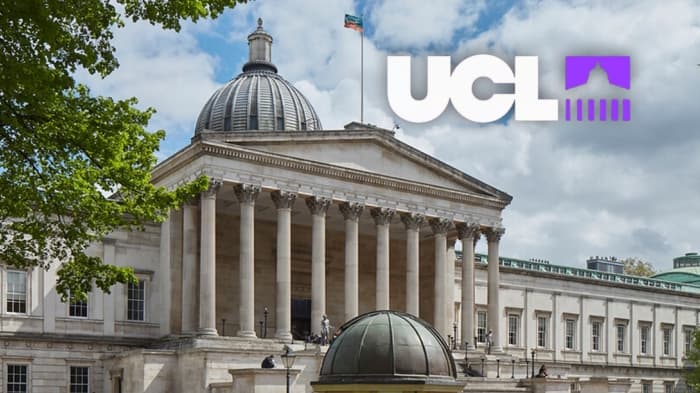
Founded in 1826 in Bloomsbury, London, University College London (UCL) was instituted as a radical counterweight to the religious and social exclusivity of England's ancient universities. Establishing itself as the first university in England to admit students irrespective of their religious affiliation and later the first to admit women on equal terms with men, UCL anchored its institutional identity in progressive innovation and multidisciplinary enquiry. Across two centuries, the institution has evolved into one of the world's premier research-intensive universities, currently educating an international student body of over 44,000 individuals representing more than 150 nations.
The university's executive and management disciplines are distributed across strategic nodes within the London metropolitan ecosystem. General business, corporate finance, and strategic analytics programs are anchored at the UCL School of Management, located on the 38th and 50th floors of One Canada Square in Canary Wharf. This positioning embeds the school directly within Europe's primary financial and technology hub, creating immediate proximity to institutional capital, commercial consultancy, and global enterprise.
Concurrently, the UCL Global Business School for Health (GBSH)—the world's first dedicated business school focused entirely on the health and healthcare sector—operates from the UCL East campus on Queen Elizabeth Olympic Park in Stratford. Together with the historic Bloomsbury campus in Zone 1, which houses foundational research libraries, interdisciplinary policy institutes, and cross-faculty research centres, UCL provides an expansive academic infrastructure tailored to mid-career executives and organizational leaders.
About the Executive MBA Programs
The portfolio of UCL executive mba programs is structured around two distinct operational pathways: generalized strategic enterprise leadership and specialized healthcare system management. Rather than relying on a singular, rigid executive curriculum, the institution delivers specialized tracks designed to accommodate the temporal constraints and strategic priorities of senior working professionals.
The UCL Flex MBA, directed by the UCL School of Management, operates as the primary executive-format degree in strategic management and leadership. The program addresses the organizational demands of digital disruption, data-informed strategy, and cross-border commercial execution. Designed to provide mid- and senior-career professionals with maximum operational autonomy, the degree utilizes an innovative hybrid architecture that allows candidates to complete their studies over a variable multi-year timeline without interrupting their corporate trajectory.
The UCL executive mba in Health, delivered by the Global Business School for Health, represents a dedicated executive degree addressing the operational, financial, and clinical governance challenges facing modern healthcare systems. Unlike conventional executive programs that offer healthcare as an elective stream, this program positions systemic health challenges, health economics, and digital health technologies at the center of every management module.
To serve an international cohort of healthcare directors and senior clinicians, the Executive MBA Health is delivered through two distinct operational frameworks: a London-anchored hybrid model that integrates asynchronous coursework with annual international residential study weeks, and an executive track operating through GBSH Dubai, blending monthly face-to-face sessions in the United Arab Emirates with comparative global health studies.
Additionally, the UCL School of Management maintains a transcontinental executive collaboration through the UCL MBA with Peking University. Offered jointly with the National School of Development (BiMBA) at Peking University's Chengze Garden Campus in Beijing, this dual-institutional format provides executives with strategic insight into enterprise leadership at the intersection of Western market dynamics and Chinese macroeconomic policy.
All Other Executive programs
Beyond full degree pathways, UCL delivers an extensive suite of non-degree executive education initiatives designed to resolve critical capability gaps among board directors, functional heads, and enterprise strategists:
The open-enrolment portfolio at the UCL School of Management comprises intensive, high-impact masterclasses delivered in the Executive Education Suite at One Canada Square. These short courses span 2.5 to 4 consecutive days and integrate applied case diagnostics, interactive simulations, and peer-to-peer workshops. Key programs include:
- Leading Change in Disruptive Times, which provides senior executives with evidence-based frameworks to differentiate technical complications from adaptive human challenges while managing organizational resistance and psychological safety;
- Artificial Intelligence for Business and Leading Data-Driven Change, which bridge technical architecture and strategic deployment, teaching leaders to harness machine learning for value-chain optimization and customer experience design;
- Creating Value with Data Analytics, focused on equipping non-technical managers with quantitative reasoning tools for board-level decision-making;
- Executive Negotiations, delivering advanced behavioral frameworks for cross-border deal structuring and multi-stakeholder dispute resolution;
- Leading for Creativity and Innovation, which equips leaders to foster internal venture design, navigate bureaucratic inertia, and champion disruptive ideas;
- Building Competitive Advantage Through Sustainability and Succeed as a Board Member, focusing on governance resilience, ESG alignment, and strategic adaptation;
- The Future of Work: Leading with Inspiration and Purpose, analyzing the cultural, technological, and generational shifts transforming modern workplace ecosystems.
In parallel, UCL designs custom corporate education frameworks for enterprise clients. Demonstrating this capability, the School of Management executed a comprehensive transformational leadership and sustainable innovation curriculum for 200 senior leaders at multinational aerospace firm Leonardo. Similarly, the school partnered with British Airways to deliver a specialized program for its Executive Committee, focusing on operationalizing net-zero aviation strategies and embedding long-term environmental sustainability into corporate governance.
For practitioners pursuing research credentials without transitioning out of industry, the Global Business School for Health delivers the Executive Doctorate in Business Administration (DBA) Health, providing senior leaders with advanced methodologies to conduct applied empirical research within their host health ecosystems.
Important Dates & Intakes
Admissions across UCL’s executive programs operate on a phased, cyclical basis to accommodate employer budgeting, corporate sponsorship cycles, and personal planning. While admissions committees review files continuously, adhering to defined cut-offs is essential for scholarship eligibility and international cohort onboarding.
| Program Pathway | Academic Intake | Round 1 Deadline | Round 2 Deadline | Final Application Deadline |
|---|---|---|---|---|
| UCL Flex MBA | September 2027 | 22 February 2027 | 24 May 2027 | 16 August 2027 |
| UCL Executive MBA Health (London) | September 2027 | October 2026 (Applications Open) | Early Spring Review Window | Mid-August 2027 (Final Enrolment Close) |
| UCL Executive MBA Health (Dubai) | September 2027 & January 2028 | Rolling Assessment Cycle | Mid-Cycle Cut-off | 6 Weeks Prior to Cohort Induction |
| UCL MBA with Peking University | September 2027 | 22 March 2027 (Visa Requirement Route) | Late Spring Review | 27 August 2027 (Non-Visa Requirement Route) |
Prospective applicants must monitor the formal UCL mba application deadline specific to their residency status. Domestic students and distance-learning candidates who do not require UK Student Visas benefit from extended submission windows reaching into late August, whereas candidates requiring sponsorship or complex logistical clearances must finalize submissions during the earlier spring rounds.
Global Recognition
UCL holds an established position among the world's elite universities, consistently securing superior rankings across international comparative audits. In the QS World University Rankings 2027, UCL is ranked joint #8 globally, reaffirming its standing as a premier global knowledge institution. In specialized subject evaluations, the university demonstrates exceptional leadership: the Academic Ranking of World Universities (Shanghai Ranking) places UCL #5 globally for Public Health, providing high-level academic credibility to the Global Business School for Health.
From a business education perspective, the UCL School of Management maintains dual accreditation from both the Association of MBAs (AMBA) and the Association to Advance Collegiate Schools of Business (AACSB). This double accreditation places the school within the top 2% of business institutions worldwide, validating the analytical rigor, corporate alignment, and curricular relevance of its executive degrees.
The academic research informing UCL’s executive curricula is similarly distinguished: the UK Research Excellence Framework (REF) ranked the UCL School of Management 2nd in the United Kingdom for business and management research power, with 95% of its research outputs categorized as world-leading or internationally excellent. Furthermore, AMBA formally recognized the program's pedagogical innovation by awarding the UCL MBA the 2024 Best Lifelong Learning Initiative Award for its proprietary MBA Labs curriculum.
Executive Programs: Duration & Fee Structure
Recognizing that executive students require structural flexibility to balance demanding career commitments with executive development, UCL utilizes a modular pacing model. The standard UCL executive mba duration spans two to five calendar years, allowing participants to adjust their term-by-term academic commitments to match their personal circumstances.
Within this framework, the structure of UCL mba fees diverges from conventional lock-step programs by offering pay-as-you-go disbursement schedules. Rather than requiring full capital commitments upfront, programs such as the Flex MBA permit executives to fund their studies on a modular basis as they enroll in specific modules across each 10-week term.
| Program Title | Academic Unit | Nominal Duration | Total Tuition Fee (Home & Overseas) | Billing Mechanics & Ancillary Expenses |
|---|---|---|---|---|
| UCL Flex MBA | School of Management | 2 to 5 Calendar Years | £45,500 total program fee | Pay-as-you-go modular billing per term. £90 online application processing fee. |
| Executive MBA Health (London) | Global Business School for Health | 24 Months (Part-time) to 5 Years (Flexible) | £49,500 total (£24,750 per year) | Annual or modular-block billing across 2 to 5 years. Travel and lodging for study weeks self-funded. |
| Executive MBA Health (Dubai) | GBSH Dubai | 2 Calendar Years (Part-time) | £27,033 per academic year (~£54,066 total) | Annual billing cycle; 10% confirmation deposit upon offer acceptance. Travel/lodging self-funded. |
| Open Executive Short Courses | School of Management | 2.5 to 4 Days (Full-time) | £3,500 to £4,100 per masterclass | Full course payment via UCL Store or direct corporate invoice prior to course commencement. |
| Programme | Duration | Fee | Format |
|---|---|---|---|
| Negotiation Essentials | 1 day | £1,000 | In Person |
| Leading Healthcare in the Age of AI - Bootcamp | 2 days | £2,100 | In Person |
| Global Healthcare Leadership for Women | 2 days | £2,000 | In Person |
| Strategic Leadership for Healthcare | 8 weeks | £1,400 | Online |
| Health Policy and Practice | 8 weeks | £1,400 | Online |
| Value-Based Healthcare | 8 weeks | £1,400 | Online |
| Artificial Intelligence for Business | 2 days | £2,750 | In Person |
| Building Competitive Advantage Through Sustainability | 3 days | £3,600 | In Person |
| Creating Value with Data Analytics | 2 days | £4,800 | In Person |
| Executive Negotiations | 2 days | £2,750 | In Person |
| Leading for Creativity and Innovation | 4 days | £4,100 | In Person |
| Leading Data-Driven Change | 2.5 days | £3,500 | In Person |
| Leading Change in Disruptive Times | 2 days | £2,750 | In Person |
| Succeed as a Board Member | 2 days | £3,250 | In Person |
| The Future of Work: Leading with Inspiration and Purpose | 4 days | £4,100 | In Person |
Note: Course details may change. Visit the official website for the latest updates.
The standard tuition fees cover all synchronous and asynchronous instruction, software platform access, digital library access, academic supervision, and core administrative costs. Incidental expenditures—including intercontinental flights, executive hotel accommodation during London or overseas residential immersion weeks, and visa procurement—are self-funded by candidates or handled through employer expense arrangements.
Online & Hybrid Executive MBA Programs
To accommodate senior leaders managing demanding corporate schedules, UCL delivers its executive education using specialized hybrid learning architectures. Rather than relying on passive distance education, the institution combines live virtual seminars with intensive on-campus executive weekends.
Within the UCL Flex MBA, instruction is organized across 10-week terms, during which executives typically register for up to two modules simultaneously. Each module requires 90 minutes of synchronous live virtual seminar engagement alongside 8 to 12 hours of weekly self-paced preparation, consisting of asynchronous video lectures, data analytics problem sets, and virtual study groups.
To augment the digital classroom, UCL delivers optional four-day executive masterclass weekends on campus at One Canada Square in Canary Wharf. Conducted over intensive six-hour daily sessions, these on-campus weekends allow executives to debate strategic challenges face-to-face, engage with senior industry practitioners, and network with faculty and peers.
The UCL Executive MBA Health uses an alternative block format specifically structured for health-sector professionals. Core coursework is partitioned into four 30-credit blocks distributed across two years. Modules operate across eight-week learning cycles, divided into three bi-weekly thematic segments concluded by synthesis and wrap-up reviews.
Live virtual seminars, scheduled to accommodate diverse international time zones, are paired with two mandatory face-to-face residential study weeks: the UK Health System Study Week (held in Year 1 at UCL East, examining NHS operational governance, digital transformation, and clinical procurement) and the Global Health Systems Study Week (held in Year 2 in major healthcare hubs such as Singapore, Japan, or the United States to examine international healthcare models).
Who These Specialisations Are Best Suited For
The functional orientations of UCL’s executive programs are specifically calibrated for distinct leadership pathways across public and private sectors:
The UCL Flex MBA is designed for ambitious corporate leaders, commercial directors, operational managers, and management consultants aiming to accelerate their progression toward general management and C-suite roles. The curriculum is well suited for professionals in technology, financial services, enterprise engineering, and consumer sectors who require broader cross-functional capabilities, an analytical command of business intelligence, and the leadership presence necessary to manage complex, cross-border corporate transformations. It also serves entrepreneurs and corporate innovators responsible for launching internal corporate ventures or scaling high-growth businesses.
Conversely, the UCL Executive MBA Health caters to clinical leaders, hospital chief executives, pharmaceutical executives, life-science directors, medical device innovators, and public healthcare policymakers. This pathway is tailored for consultant surgeons, chief medical officers, and senior healthcare administrators navigating systemic challenges such as workforce shortages, demographic pressures, digital health adoption, and regulatory restructuring. It serves professionals who require a deep understanding of health economics, pharmaceutical supply chain dynamics, and health systems policy to drive organizational transformation and improve patient outcomes.
The non-degree executive masterclasses are targeted toward executive board directors, vice presidents, and senior functional specialists who require immediate, focused skill enhancement without committing to a full multi-year degree. These programs provide targeted development for commercial negotiators, digital transformation directors, and corporate sustainability officers seeking actionable frameworks to solve specific organizational challenges.
Eligibility Criteria & Work Experience
Gaining admission to UCL’s executive leadership degrees requires meeting stringent academic standards and demonstrating progressive career achievement. The UCL executive mba eligibility benchmarks are designed to select candidates capable of contributing meaningful, high-level operational perspectives to cohort discussions. Academic prerequisites require applicants to hold an upper second-class honours (UK 2:1) bachelor’s degree from a recognized university, or an equivalent international qualification verified through UCL's international equivalency standards (typically equivalent to a US GPA of 3.3/4.0 or national equivalent).
Regarding practical experience, candidates applying to the UCL Flex MBA must possess at least three years of full-time, relevant post-graduate work experience before starting the degree. However, the typical executive cohort average spans six to eight years of professional experience, with candidates demonstrating significant cross-functional management, budgetary authority, or strategic operational leadership.
For the Executive MBA Health, incoming candidates typically bring five to ten years of substantial career experience across healthcare operations, pharmaceutical management, life-sciences consulting, or health tech ventures.
To accommodate exceptional applicants who do not hold a formal 2:1 undergraduate degree, UCL maintains a non-standard entry route. Candidates possessing non-qualifying degree classifications or lacking formal degrees may be admitted to the Flex MBA if they can demonstrate a minimum of five years of relevant professional experience, including at least two years in senior leadership, executive management, or enterprise director positions.
Standardized testing policies reflect the experiential focus of the degree: the UCL executive mba requirements for both the Flex MBA and the Executive MBA Health do not include mandatory GMAT or GRE submissions. Sponsoring admissions committees evaluate leadership maturity, strategic achievements, and analytical capacity holistically, though candidates may submit exceptional test scores voluntarily to reinforce their application. In contrast, the joint UCL-Peking University MBA retains a mandatory testing requirement, recommending a minimum GMAT score of 600 or equivalent on the GRE or BiMBA internal test.
Admission Requirements & Application Process
The admissions evaluation process for the UCL executive mba admission is designed to assess strategic thinking, intellectual capability, and leadership potential. The application is completed entirely through the UCL Graduate Application Portal and requires submitting a comprehensive personal and professional dossier.
Applicants must compile and upload certified academic transcripts and degree certificates, along with a detailed executive resume charting their career progression, promotions, managerial appointments, and notable operational achievements. The written evaluation centers on three to four reflective personal essays. These essays ask candidates to analyze their reasons for pursuing the UCL degree, articulate their long-term executive ambitions, detail their experience managing strategic initiatives, and explain how their background will enrich peer learning within the cohort.
Additionally, the dossier requires two professional references, ideally from senior corporate officers, executive board members, or industry supervisors who can validate the candidate's strategic decision-making capacity and managerial performance. For candidates whose primary language is not English or whose higher education was conducted in another language, verification of UCL Level 2 English proficiency is mandatory. This standard is satisfied through recognized tests:
- IELTS Academic with an overall score of 7.0 and minimum subscores of 6.5 in all bands;
- TOEFL iBT with an overall score of 96, including at least 24 in reading and writing and 22 in speaking and listening;
- Duolingo English Test with an overall score of 125, including minimum scores of 115 in comprehension, literacy, and conversation, and 120 in production.
Once the digital dossier is reviewed and the non-refundable £90 application fee is processed, qualified applicants are invited to an evaluative admissions interview. Conducted virtually or on campus with an academic program director, this interview examines the candidate's strategic mindset, collaborative potential, and organizational maturity.
Faculty Details & Expertise
Executive cohorts at UCL are taught by leading academic researchers, respected policy advisors, and seasoned business executives:
Professor Nora Colton serves as the Director of the UCL Global Business School for Health and holds the Chair in Leadership and Management for Healthcare. A prominent health economist and policy strategist, Colton regularly contributes to national and international healthcare debates, advising on the NHS 10-Year Workforce Plan, healthcare system capacity, and healthcare financing models.
Professor Harveen Chugh directs the UCL Flex MBA and serves as Professor of Entrepreneurship at the UCL School of Management. Named among Poets&Quants' "Top 40 Under 40 Business School Professors," Chugh previously directed the Global Online MBA at Warwick Business School. In addition to her academic work, she is an active venture investor and corporate founder who has supported 25 emerging start-ups in securing nearly £5 million in early-stage investment.
Dr. Colin Fisher, Associate Professor of Organisations and Innovation and Director of the PhD Programme at the UCL School of Management, brings extensive academic training from Harvard University. An authority on collective intelligence, group dynamics, and executive creativity, Fisher teaches advanced negotiations and creative leadership, translating psychological insights into strategic practices.
Professor Martin Kilduff, Professor of Organisational Behaviour and Head of Research at the School of Management, is internationally recognized for his research on organizational social networks. His scholarship focuses on structural dynamics, organizational politics, and the informal networks that shape executive influence.
Professor Simcha Jong, Deputy Director of Research at GBSH and Director of the DBA Health, focuses his scholarship on biomedical commercialization, life-sciences venture capital, and institutional partnerships between biopharma corporations and public healthcare bodies.
Dr. Clara Aranda-Jan, Associate Professor in Digital Health and Entrepreneurship, brings expertise in digital health solutions, mHealth delivery, and the scaling of health-technology start-ups across both developed and emerging markets.
Dr. Marzena Nieroda, Associate Professor in Marketing and Commercialisation in Healthcare and Deputy Director of Partnerships and Enterprise at GBSH, focuses on consumer healthcare engagement, disease prevention strategies, and commercialization in health markets.
Research Opportunities
Rather than focusing on purely theoretical inquiry, research within UCL's executive programs emphasizes practical corporate consulting, applied empirical investigation, and strategic organizational design:
Within the Executive MBA Health, applied research forms an integral part of the curriculum through two major capstone initiatives. In the Health Consultant Project (GBSH0036), candidates operate as internal or external management consultants on live corporate briefs, partnering with healthcare providers, NHS clinical trusts, global pharmaceutical companies, or medical device developers to resolve real operational and strategic bottlenecks.
Concurrently, through the Global Health Research Project (GBSH0035), candidates work under faculty supervision to design empirical research initiatives examining pressing global health questions, health systems financing, or healthcare delivery reforms.
For executives enrolled in the UCL Flex MBA or the dual Peking University MBA, research centers on the comprehensive Business Research Project (MSIN0125 / Capstone). Requiring an exhaustive 12,000-word applied business dissertation or strategic venture plan, this project allows executives to conduct in-depth research on an urgent organizational issue within their sponsoring firm or develop a fully realized business model for a new commercial enterprise.
Additionally, executive students can leverage resources through UCL Innovation & Enterprise, collaborating with university research commercialization teams and enterprise spinouts across the broader London ecosystem.
Scholarships
The university offers competitive funding support to ensure executive cohorts reflect diverse professional, demographic, and international backgrounds. Prospective students apply for UCL mba scholarships directly within their admissions application by submitting targeted essays outlining their leadership qualifications and alignment with specific award categories.
| Scholarship Scheme | Administering Entity | Award Quantum | Target Demographics | Evaluation Benchmarks |
|---|---|---|---|---|
| UCL Flex MBA Merit Scholarships | School of Management | Up to 25% Tuition Remission | Home & International Cohorts | Exceptional academic achievement, proven corporate acceleration, entrepreneurial leadership, or UCL alumni status. |
| Diversity & Inclusion Flex MBA Awards | School of Management | Up to 25% Tuition Remission | Global Underrepresented Groups | Substantial leadership record among Women in Senior Leadership, LGBTQIA+ executives, or ethnic minority professionals. |
| GBSH Future Impact Leaders Scholarship | Global Business School for Health | £15,000 Tuition Remission | Home & International Cohorts | Demonstrated commitment to systemic healthcare transformation, clinical innovation, or health equity. |
| GBSH Executive MBA Health Excellence Scholarship | Global Business School for Health | £15,000 Tuition Remission | Home & International Cohorts | High academic honors, advanced clinical performance, and outstanding strategic leadership track record. |
| GBSH Healthcare Excellence Award | Global Business School for Health | £10,000 Tuition Remission | UK Domestic / NHS Professionals | Demonstrated operational excellence and leadership impact within the UK National Health Service or public health sector. |
| 30% Club Executive Education Scholarship | School of Management | 100% Course Fee Remission | Senior Women Executives | Full tuition coverage for open-enrolment executive programs to accelerate female representation on boards. |
Scholarship applications are evaluated holistically after an admissions offer is made, and successful awards are applied directly as tuition fee deductions across the candidate’s modular enrollment schedule.
Accommodation & Living Expenses
Because UCL’s executive programs are structured around hybrid, distance-learning, and modular delivery models, working professionals typically do not incur full-year London living costs. However, candidates attending executive weekend modules in Canary Wharf, participating in the London Health System Study Week, or pursuing extended relocation must plan for regional accommodation and transit expenses.
| Expense Category | University Postgraduate Facilities | Private London Housing Sector | Executive Residential Study Weeks |
|---|---|---|---|
| Weekly Rental Accommodations | £153 to £529 / week (UCL Postgraduate Halls) | £150 to £300 / week (Shared private rentals, excl. utilities) | £140 to £220 / night (Corporate and boutique hotels) |
| Annualized / Aggregate Rent | £7,956 to £27,508 (Standard 51-week contract) | £7,800 to £15,600 (52-week tenancy average) | £800 to £1,200 per 6-night intensive residential block |
| Food & Subsistence (Weekly / Total) | £53 / week (~£2,756 per year) | £53 to £80 / week (Independent meal preparation) | Lunches and select cohort dinners subsidized by program |
| Public Urban Transit (TfL) | £31.20 / week (£119.90 / month, Zone 1–2 Oyster) | £31.20 / week standard pay-as-you-go | £10.00 / day (Contactless daily cap, Zones 1–3) |
| Study Travel & Incidentals | £18 / week (~£936 per year for utilities/data) | £25 to £40 / week (Personal amenities and connectivity) | £1,500 to £3,000 for overseas international health weeks |
For candidates attending the required residential weeks, UCL Global Business School for Health covers local ground transit, educational facility access, scheduled company site visits, cohort lunches, and select formal group dinners. Students fund their individual return airfare, personal accommodation, and incidentals, which typically average £1,000 to £1,200 for the UK Health Systems Week and £1,500 to £3,000 for the international immersion week.
Placements, Employability & Career Opportunities
Executive education at UCL is designed around strategic career acceleration, lateral leadership transitions, and board-level placement rather than entry-level corporate recruiting. Support for UCL mba careers is delivered through dedicated internal careers services across both the School of Management and GBSH:
Students enrolled in the Flex MBA receive individualized executive career coaching from dedicated advisors throughout the duration of their degree and for three full years post-graduation. This career support focuses on executive narrative building, board appointment strategies, personal brand positioning, and executive compensation negotiations. In parallel, GBSH integrates psychometric leadership profiling to help candidates evaluate their leadership attributes and align their career trajectories with evolving public and private healthcare models.
Career services teams organize focused executive networking sessions, venture showcases, and recruitment roundtables with global partners across management consulting, financial services, biotechnology, digital health, and government administration. These industry links are reinforced by the applied capstone consultancy projects, which regularly serve as springboards for internal promotions, corporate client transitions, or external board appointments.
Career Opportunities After an Executive MBA
Graduates of UCL's executive business degree programs demonstrate documented upward professional mobility, stepping into senior leadership roles across industries.
According to verified student and alumni career outcome metrics, 64% of UCL MBA graduates secure at least one significant promotion or lateral career move during or shortly after completing their degree. Furthermore, 36% of alumni report direct salary growth, achieving an overall average salary of £131,730.
| Career Trajectory Pathway | Functional Destination Roles | Primary Industry Sectors |
|---|---|---|
| C-Suite & Enterprise Management | Chief Executive Officer (CEO), Chief Operating Officer (COO), Managing Director | Financial Services, Technology, Energy, Industrial Manufacturing |
| Strategic Leadership & Operations | Commercial Affairs Director, Head of Human Resources, Management Consultant | Strategy Consulting, Corporate Advisory, Infrastructure |
| Health Systems & Clinical Leadership | Clinical Hospital Director, Healthcare Operations Director, Lead Systems Strategist | Public Health Services (e.g., NHS), Private Hospital Networks |
| Life Sciences & Commercial Health | Global Medical Affairs Director, Partner in Life Sciences Advisory, Health-Tech Founder | Pharmaceuticals, Biotechnology, Health Informatics Start-ups |
These outcomes demonstrate how the curriculum bridges technical, clinical, and functional competencies with overarching strategic, financial, and organizational capabilities, positioning graduates for senior enterprise leadership.
Alumni Network
Completing an executive program at UCL provides lifelong access to the university's global alumni community, which includes more than 400,000 former students across 190 countries.
Alumni connect through Bentham Connect, UCL's exclusive digital networking platform, alongside specialized executive alumni groups on LinkedIn. These platforms support cross-disciplinary networking, international deal sourcing, and senior-level hiring.
The alumni ecosystem actively supports current students: over 250 experienced alumni volunteer annually through UCL Careers to deliver guest lectures, participate in executive panels, mentor current students, and provide industry perspective.
Globally, the network is organized into regional alumni groups spanning major commercial centers such as New York, Beijing, Hong Kong, Singapore, Dubai, and Zurich, providing executives with established professional connections across key international markets.
Global Exposure & International Opportunities
UCL embeds international business perspectives throughout its executive education curricula. Rather than examining strategic challenges solely through a domestic lens, programs integrate cross-border business environments into their core modules.
This international exposure is central to the Executive MBA Health through its two required residential study weeks. During the Global Health Systems Study Week in Year 2, cohorts travel to international healthcare hubs—such as Singapore, Japan, or the United States—for a week of intensive field study. Executives analyze the demographic, regulatory, and socio-economic realities governing healthcare delivery outside the UK, touring hospitals, meeting policymakers, and assessing varied healthcare financing models.
Global outreach is further reinforced through dedicated regional operations, such as GBSH Dubai, and international academic partnerships, such as the UCL MBA with Peking University in Beijing.
These academic initiatives are complemented by the international composition of UCL's cohorts, which bring together senior leaders, clinicians, and corporate strategists from across Europe, North America, the Middle East, Africa, and Asia, ensuring that classroom discussions reflect diverse geopolitical and market viewpoints.
Advantages of Pursuing an Executive MBA from a Global University
Enrolling in an executive MBA program at a globally ranked, comprehensive university provides several distinct advantages over stand-alone business schools:
First, UCL's multidisciplinary breadth enables executives to study at the intersection of business, medical sciences, engineering, and public policy, fostering innovative perspectives on emerging global challenges.
Second, dual international accreditation from AMBA and AACSB confirms that the curriculum meets the highest benchmarks for management education, ensuring that credentials are recognized and respected by corporate boards and executive search firms worldwide.
Third, the flexible, pay-as-you-go modular structure allows working executives to manage both their academic workload and tuition outlays, aligning their studies with ongoing corporate and personal priorities.
Finally, UCL’s strategic presence in London—combining facilities in Canary Wharf, Bloomsbury, and Queen Elizabeth Olympic Park—connects participants directly to Europe's commercial, financial, and healthcare hubs, offering immediate access to leading corporations, policymakers, and innovative ventures.