November 3rd, 2026
Harvard University, US
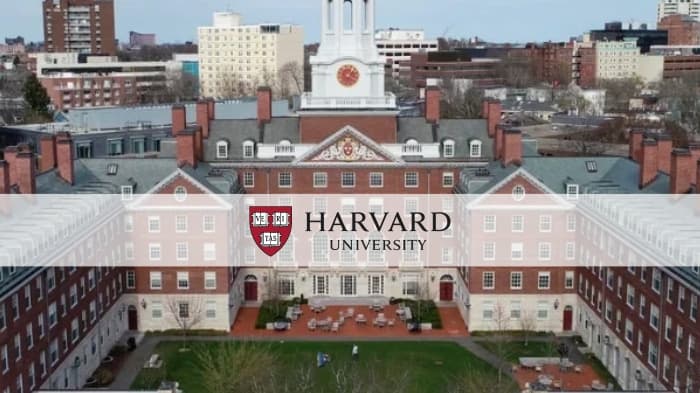
Founded in 1636 by vote of the Great and General Court of the Massachusetts Bay Colony, Harvard University is the oldest institution of higher learning in the United States. Across nearly four centuries, the university has evolved from a local colonial college dedicated to educating the clergy and magistrate class into an internationally preeminent research institution. Its decentralized academic structure encompasses twelve degree-granting schools, an extensive network of specialized global research outposts, and an endowment that supports continuous multidisciplinary inquiry across governance, medicine, the physical sciences, law, and corporate enterprise.
Harvard Business School (HBS) was founded in 1908 under the guidance of Harvard University's Board of Overseers, inaugurating the world's first Master of Business Administration (MBA) degree. Initially operating from retrofitted lecture halls scattered across the central Cambridge campus with an entering class of 80 students, the business school underwent fundamental institutional development during the 1920s under the stewardship of Dean Wallace B. Donham. Facilitated by a major philanthropic endowment from financier George F. Baker, HBS crossed the Charles River to establish a dedicated, self-contained residential campus on Soldiers Field in Boston, Massachusetts. Today, the business school encompasses 33 administrative, research, and residential buildings situated across 40 acres, an architecture specifically engineered to integrate academic instruction, executive living, and collaborative inquiry.
About the Executive MBA Programs
A foundational design choice separates Harvard University from peer business institutions: Harvard Business School does not confer a degree officially designated as an Executive MBA. While institutional peers adopted part-time, evening, or alternating weekend Executive MBA models, Harvard maintained that its Master of Business Administration degree must remain an immersive, full-time, two-year residential program. To address the executive market segment seeking a harvard executive mba, the institution established its flagship Comprehensive Leadership Programs (CLPs) within its Executive Education division. These immersive, residential offerings are structured to deliver executive-level business administration frameworks, strategic execution paradigms, and cohort networks equivalent to elite executive degree programs.
The school's executive leadership portfolio comprises four flagship programs: the Advanced Management Program (AMP), the General Management Program (GMP), the Program for Leadership Development (PLD), and the Owner/President Management (OPM) program. Each program addresses a distinct tier of executive maturity, from high-potential functional leaders to enterprise owners and global C-suite officers. A defining feature of these programs is institutional credentialing: participants who complete AMP, GMP, or OPM—as well as those who fulfill the sequential requirements of PLD—are granted official Harvard Business School Alumni Status, securing the same institutional network affiliation enjoyed by graduates of the traditional MBA program.
| Program Designation | Primary Participant Profile | Core Strategic Focus | Delivery Structure | Credential & Alumni Status Conferred |
|---|---|---|---|---|
| Advanced Management Program (AMP) | C-suite officers, managing directors, enterprise executive committee members | Corporate renewal, geopolitical dynamics, enterprise governance, global strategy | Blended: 6 weeks residential (two 3-week modules) + 5 weeks virtual | Certificate of Completion; full HBS Alumni Status |
| General Management Program (GMP) | Senior functional division heads transitioning to enterprise leadership | Cross-functional alignment, strategic leadership, operational design, financial analysis | Blended: 4 weeks residential + 3 weeks live online + 9 weeks self-paced | Certificate of Completion; full HBS Alumni Status |
| Program for Leadership Development (PLD) | Accelerating high-potential directors and senior managers | Foundational leadership, business acumen, operational change, talent strategy | Blended: 4 weeks residential (two 2-week modules) + 6 months part-time virtual | Certificate of Completion; HBS Alumni Status via Module 5 or 10 PLDA points |
| Owner/President Management (OPM) | Major equity holders, company founders, enterprise chief executives | Enterprise valuation, equity strategy, market disruption, succession, scaling | Residential: Three 3-week campus units distributed across a 24-month horizon | Certificate of Completion; full HBS Alumni Status |
Important Dates & Intakes
Admissions calendars depend on whether an applicant is seeking entry into the two-year MBA or applying to the executive leadership tracks. For candidates evaluating graduate master's tracks, observing each specific harvard mba application deadline is essential, as the institutional evaluation board evaluates dossiers across strictly demarcated rounds.
The full-time MBA program operates on a structured, two-round annual cycle for its autumn matriculation window, alongside an early-career deferred admissions timeline:
| Full-Time MBA Application Round | Application Cutoff (12:00 PM Eastern Time) | Board Admissions Decision Release |
|---|---|---|
| Round 1 | September 9, 2026 | December 10, 2026 |
| Round 2 | January 5, 2027 | March 25, 2027 |
| 2+2 Deferred Admission | April 28, 2027 | June 30, 2027 |
The Comprehensive Leadership Programs operate under rolling admissions frameworks, evaluating candidates continuously until cohort allocations are reached. Because these programs require corporate sponsorship confirmation, residential housing assignments, and international visa clearances, prospective candidates are encouraged to submit their credentials three to six months prior to modular initiation.
| Executive Track | Scheduled Program Windows | Application Submission Policy |
|---|---|---|
| Advanced Management Program (AMP) | Cohort 1: February 21 – May 7, 2027 Cohort 2: September 5 – November 12, 2027 | Rolling admission; reviewed upon completion until filled |
| General Management Program (GMP) | Cohort 1: January 4 – April 23, 2027 Cohort 2: Autumn modular sequence | Rolling admission; reviewed upon completion until filled |
| Program for Leadership Development (PLD) | Cohort Cycle: December 1, 2026 – June 25, 2027 Additional recurring semi-annual intakes | Rolling admission; early review strongly advised |
| Owner/President Management (OPM) | Unit 1 (Session 1): May 9 – 28, 2027 Unit 1 (Session 2): September 5 – 24, 2027 | Rolling admission; equity verification required prior to seat confirmation |
Global Recognition
Harvard University and Harvard Business School consistently occupy top-tier placements across international institutional rankings, reflecting sustained performance in academic scholarship, pedagogical innovation, and graduate earning capacity. The Financial Times Global MBA Ranking has positioned Harvard among the top ten institutions internationally, supported by an established reputation in finance, management consulting, and entrepreneurial value creation. Independent institutional evaluations, including the QS World University Rankings and Bloomberg Businessweek, place Harvard among the world's foremost business schools for employer reputation, faculty citation impact, and executive alumni placement.
Within the corporate landscape, Harvard's executive development tracks hold prestige that frequently supersedes traditional EMBA degrees. Multinational conglomerates, private equity firms, and public sector organizations routinely sponsor senior talent through AMP, GMP, and PLD to prepare them for enterprise leadership. The brand equity of Harvard Business School provides global market recognition, serving as an enduring credential for board appointments, international assignments, and cross-border commercial transactions.
Executive Programs: Duration & Fee Structure
The instructional formats across the portfolio of Harvard Executive MBA programs balance intensive on-campus learning with ongoing professional responsibilities. The operational scope of Harvard Executive MBA duration combines intensive residential modules on the Boston campus with structured distance learning and in-company project implementation, minimizing prolonged absences from operational duties.
The fee schedule for executive programs is comprehensive, covering instructional delivery, case licensing, specialized coaching, private on-campus executive accommodations, and complete dining services during residential units. Conversely, examining Harvard MBA fees for the full-time degree requires differentiating between direct academic tuition and separate living expenditures.
| Program Designation | Structured Modular Duration | Comprehensive Program Cost | Inclusions and Payment Terms |
|---|---|---|---|
| Advanced Management Program (AMP) | 11 weeks total: 3 modules (6 weeks on HBS campus, 5 weeks virtual, 40–50 hours pre-work) | $95,000 | Complete tuition, course materials, private executive accommodations, and all on-campus meals. |
| General Management Program (GMP) | 16 weeks total: 4 modules (4 weeks on HBS campus, 3 weeks live online, 9 weeks self-paced virtual) | $81,000 | Complete tuition, instructional resources, residential executive housing, and comprehensive dining services. |
| Program for Leadership Development (PLD) | ~7 months total: 4 modules (4 weeks on HBS campus over two residential units, 6 months virtual coursework) | $57,000 | Complete tuition, simulation tools, private campus accommodations, and all module dining. |
| Owner/President Management (OPM) | 24 months total: 3 units (9 weeks on HBS campus split into three 3-week annual immersions) | $55,000 (Unit 1 fee only; subsequent units invoiced separately) | Instructional tuition, case materials, campus accommodations, and meals for Unit 1. |
| Full-Time Master of Business Administration (MBA) | 2 academic years (two 9-month residential academic terms) | $78,700 annual tuition (Total Cost of Attendance: $126,536 per year for a single student) | Academic tuition and mandatory program fees ($2,800); housing, meals, and health insurance billed separately. |
| Program Name | Duration | Fees | Mode |
|---|---|---|---|
| Succeeding as a Strategic CFO | 4 days | $13,000 | In Person |
| Competing in the Age of AI—Virtual | 57 days | $7,250 | Online |
| Strategic Marketing for Driving Growth | 6 days | $15,550 | In Person |
| Preparing to Be a Corporate Director | 4 days | $13,000 | In Person |
| Building a Legacy: Family Office Wealth Management | 4 days | $13,500 | In Person |
| Generative AI Strategy and Execution | 4 days | $12,000 | In Person |
| Families in Business | 6 days | $18,500 | In Person |
| High Potentials Leadership Program | 6 days | $18,500 | In Person |
| Transforming Health Care Delivery | 5 months | $28,000 | Blended |
| Making Corporate Boards More Effective | 4 days | $13,000 | In Person |
| Changing the Game: Negotiation and Competitive Decision-Making | 6 days | $16,000 | In Person |
| Compensation and Human Capital Committees | 3 days | $8,250 | In Person |
| Audit and Risk Committees | 3 days | $8,250 | In Person |
| Designing and Executing Corporate Revitalization | 6 days | $16,000 | In Person |
| Women on Boards: Succeeding as a Corporate Director | 5 days | $14,500 | In Person |
| Program for Leadership Development | 6 months | $57,000 | Blended |
| Authentic Leader Development | 6 days | $17,000 | In Person |
| Leading and Building a Culture of Innovation | 6 days | $17,000 | In Person |
| Senior Executive Leadership Program—Middle East | 9 months | $85,000 USD + VAT | In Person |
| Strategy: Building and Sustaining Competitive Advantage | 6 days | $18,500 | In Person |
| General Management Program | 4 months | $81,000 | Blended |
| Agribusiness Seminar | 4 days | $12,500 | In Person |
| Real Estate Management Program | 6 days | $16,000 | In Person |
| Senior Executive Leadership Program—India | 8 months | ₹44,00,000 + GST | In Person |
| Mergers and Acquisitions | 6 days | $18,500 | In Person |
| Leading Professional Service Firms | 6 days | $18,500 | In Person |
| Leading Family Business Strategy—Virtual | 8 days | $3,000 | Online |
| Driving Strategic Decisions—Virtual | 1.5 months | $7,250 | Online |
| Mastering Strategy Essentials—Virtual | 36 days | $7,250 | Online |
| Advanced Management Program | 2.5 months | $95,000 | Blended |
| Launching New Ventures | 2.5 months | $19,250 | In Person |
| Foundations of Private Equity and Venture Capital | 4 days | $12,500 | In Person |
| The Women's Leadership Forum | 5 days | $14,500 | In Person |
| Private Equity and Venture Capital | 4 days | $13,000 | In Person |
| Leadership for Senior Executives | 6 days | $18,500 | In Person |
| Leading Change and Organizational Renewal | 6 days | $18,500 | In Person |
| Managing Innovation | 5 days | $13,500 | In Person |
| Risk Management for Corporate Leaders—Virtual | 11 days | $9,250 | Online |
| Ascending the Peak: Finding the Leader Within—Virtual | 2 months | $6,250 | Online |
| Advancing Women of Color in Leadership | 4 days | $6,250 | In Person |
| Driving Nonprofit Performance and Innovation—Virtual | 9 days | $4,400 | Online |
| Advanced Corporate Director Seminar | 3 days | $8,500 | In Person |
| Leading in the Digital Era | 6 days | $15,500 | In Person |
| Transforming Customer Experiences | 6 days | $15,500 | In Person |
| Women's Leadership Essentials—Virtual | 36 days | $7,250 | Online |
| Driving Digital and AI Strategy | 6 days | $15,500 | In Person |
| Growing as an Enterprise Leader | 6 days | $18,500 | In Person |
| Owner/President Management | 20 days | $55,000 | In Person |
| Senior Executive Program—Africa | 3 months | $30,000 | Blended |
| PLD Module 5 | 2 months | $29,750 | Blended |
| Leading Global Businesses | 6 days | $18,500 | In Person |
| Value Creation Through Effective Boards | 4 days | EUR 11,000 | In Person |
| The Business of Entertainment, Media, and Sports | 4 days | $13,500 | In Person |
| Rising Generation in the Family Enterprise | 4 days | $13,500 | In Person |
| Driving Corporate Performance | 6 days | $16,250 | In Person |
| Aligning Strategy and Sales | 6 days | $16,250 | In Person |
| Global Colloquium on Participant-Centered Learning | 6 days | $8,250 | In Person |
| Strategic Perspectives in Nonprofit Management | 6 days | $7,750 | In Person |
| Senior Executive Leadership Program—China | 7.5 months | 680,000 RMB | In Person |
| China Leadership Renewal Program | TBC | TBC | In Person |
| Competing in the Age of AI | TBC | TBC | In Person |
| Creating Brand Value | TBC | TBC | In Person |
| Disruptive Innovation: Strategies for a Successful Enterprise | TBC | TBC | In Person |
| Finance for Senior Executives | 14 days | $14,750 | Blended |
| Investment Management Workshop | TBC | TBC | In Person |
| Public Education Leadership Project | TBC | TBC | In Person |
| Strategic Negotiations: Dealmaking for the Long Term | TBC | TBC | In Person |
Note: Course details may change. Visit the official website for the latest updates.
Online & Hybrid Executive MBA Programs
To support senior professionals who cannot step away from their organizations for extended periods, Harvard Business School has developed a hybrid learning model that combines digital instruction with on-campus residencies. Rather than relying on static, prerecorded lectures, these hybrid leadership tracks use the HBS Live Online Classroom. This synchronous, digital environment features a high-resolution video display that mirrors the curved amphitheater layout of an HBS lecture hall, allowing faculty to orchestrate discussions, cold-call participants, and lead debates in real time.
The hybrid delivery model follows a structured cycle that links classroom concepts directly to organizational practice:
- The instructional sequence begins with preparatory digital modules delivered through Harvard Business School Online. Working professionals spend 10 to 12 hours per week completing foundational coursework in quantitative analytics, financial accounting, and managerial economics.
- Participants then transition into synchronous live online learning, where international cohorts engage in case discussions, faculty lectures, and small-group strategy debates.
- Between formal terms, executives undertake guided workplace projects, applying diagnostic frameworks directly to organizational challenges under the mentorship of assigned executive coaches.
- Each program culminates in residential campus modules, where cohorts live and study together at Soldiers Field, synthesizing their learning through intensive study groups and peer simulations.
Harvard University previously extended this hybrid model through cross-faculty initiatives, such as the Harvard Business Analytics Program (HBAP), an executive credential offered jointly by HBS, the John A. Paulson School of Engineering and Applied Sciences, and the Faculty of Arts and Sciences. Before concluding in 2026 after graduating more than 1,250 leaders, HBAP demonstrated the value of combining online data architecture courses with on-campus leadership immersions.
Who These Specialisations Are Best Suited For
Rather than offering generic functional majors, Harvard Business School organizes its executive tracks around an executive's scope of organizational authority, enterprise scale, and strategic responsibilities.
The Advanced Management Program is designed for senior enterprise leaders, including C-suite officers, managing directors, and executive board members who guide large organizations. The curriculum focuses on broad enterprise leadership, corporate transformation, and geopolitical strategy, helping leaders navigate macro-level disruption and organizational renewal.
The General Management Program is tailored for senior functional leaders, such as chief information officers, regional sales directors, or heads of operations, who are moving into roles with enterprise-wide P&L responsibility. The program helps specialists transition into general managers by developing cross-functional fluency across corporate finance, operational strategy, marketing, and talent alignment.
The Program for Leadership Development is structured for high-potential directors and senior managers who have delivered strong functional results and are being groomed for broader corporate leadership. Coursework emphasizes operational agility, cross-departmental collaboration, and strategic decision-making, helping rising leaders expand their organizational impact.
The Owner/President Management program is built specifically for founders, majority owners, and principal equity holders who lead growing, privately held enterprises. The curriculum addresses the specific challenges of entrepreneurial ownership, including business valuation, equity recapitalization, talent scaling, and generational succession.
Eligibility Criteria & Work Experience
Evaluating Harvard Executive MBA eligibility requires looking beyond standardized test metrics to assess an applicant's professional maturity, organizational impact, and career trajectory. Because these executive tracks are designed around peer learning, the admissions committee seeks candidates with substantial leadership experience who can contribute meaningful operational perspectives to case discussions.
The Advanced Management Program typically requires 20 to 25 or more years of professional experience, with candidates holding executive committee or C-suite positions overseeing major operational divisions.
The General Management Program requires approximately 15 to 20 or more years of experience, with candidates demonstrating a track record of functional success and upcoming or recent transitions into enterprise-wide general management.
The Program for Leadership Development requires a minimum of 8 to 10 years of professional experience, though most admitted participants bring 10 to 15 or more years of progressive leadership experience.
The Owner/President Management program requires at least 10 years of operating experience, accompanied by proof of significant equity ownership and active executive control (such as CEO, President, or Managing Director) in an enterprise generating substantial annual revenue.
By contrast, the full-time MBA program requires a minimum of two years of full-time professional experience, with the matriculating cohort averaging five years of career seasoning prior to enrollment.
Admission Requirements & Application Process
Achieving harvard executive mba admission involves an evidence-based institutional evaluation process designed to build a high-caliber cohort capable of testing assumptions during case discussions.
The framework governing harvard executive mba requirements intentionally excludes standardized examinations such as the GMAT or GRE, as well as undergraduate GPAs, prioritizing documented leadership achievements instead.
The application dossier requires a detailed curriculum vitae outlining professional advancements, budgetary authority, direct reports, and notable strategic accomplishments.
Applicants must submit an official organizational chart illustrating their position relative to executive leadership and the board of directors.
A central element is the organizational nominating statement, where a senior corporate officer confirms the candidate's executive potential and commits the organization to releasing the executive for all residential modules. For the OPM track, this is replaced by official documentation verifying significant equity ownership and active executive authority.
Candidates complete targeted personal statements outlining their organizational challenges, leadership philosophy, and objectives for the program.
Demonstrated English language proficiency is mandatory, as participants must actively debate complex business problems in fast-paced classroom settings.
Applications are reviewed on a rolling basis, with admissions decisions typically delivered within four to six weeks of file completion.
In contrast, applying to the traditional full-time MBA program requires a broader set of evaluative materials, reviewed across two strict admission rounds. Candidates are evaluated across three institutional criteria: they must demonstrate that they are business-minded, leadership-focused, and growth-oriented.
The application requires undergraduate transcripts, standardized testing scores (with a median GMAT Focus Edition score of 685 or traditional GMAT of 730), proof of English proficiency (discouraging TOEFL scores below 109, IELTS below 7.5, or Duolingo English scores below 145), and two professional recommendations.
Applicants must also submit three required essays:
- A business-minded essay (up to 300 words) reflecting on how past choices have shaped career aspirations and broader business impact.
- A leadership-focused essay (up to 250 words) detailing the formative experiences that have shaped their leadership style and investment in others.
- A growth-oriented essay (up to 250 words) providing concrete evidence of intellectual curiosity and describing how it fueled personal development.
Candidates invited to interview must complete a written reflection (300 to 450 words) within 24 hours of the conversation, offering a thoughtful assessment of the exchange.
Faculty Details & Expertise
Harvard Business School's instructional model brings together senior tenure-track professors who balance academic research, management consulting, and classroom teaching. Rather than remaining detached academics, HBS faculty actively advise multinational corporations, serve on corporate boards, and contribute to public policy, ensuring case discussions reflect current economic realities.
Notable faculty who anchor both the executive programs and MBA curricula include:
- Dean Srikant M. Datar, the George F. Baker Professor of Administration, an authority on management accounting, governance, and the strategic deployment of artificial intelligence.
- Professor Cynthia A. Montgomery, the Timken Professor of Business Administration and Charles B. (Tex) Thornton Chair of the Advanced Management Program, known for her scholarship on corporate strategy and competitive positioning.
- Professor Stefan H. Thomke, the William Barclay Harding Professor of Business Administration and Faculty Chair of the General Management Program, an expert on business experimentation, operational innovation, and product design.
- Professor Ramon Casadesus-Masanell, the Herman C. Krannert Professor of Business Administration and Unit Head of Strategy, specializing in digital competitive dynamics and business model innovation.
- Professor Joshua D. Margolis, the James Dinan and Elizabeth Miller Professor of Business Administration and Chair of the Program for Leadership Development, whose research explores organizational behavior, ethical leadership, and managerial resilience.
- Professor Eugene F. Soltes, the McLean Family Professor of Business Administration and Unit Head of Accounting and Management, leading OPM research into corporate misconduct, risk architectures, and managerial compliance.
- Professor Linda A. Hill, the Wallace Brett Donham Professor of Business Administration, recognized internationally for her work on leading organizational transformation and building agile corporate cultures.
Instruction relies primarily on the Case Method, a teaching approach pioneered at Harvard. Rather than delivering lectures, faculty facilitate dynamic, participant-led discussions.
Professors use strategic questioning and cold-calls to push executives to synthesize incomplete information, defend their strategic choices, and assess alternative solutions proposed by peers.
Research Opportunities
Harvard Business School's research infrastructure supports empirical business research across major global industries. At the center of this ecosystem is Baker Library | Bloomberg Center, one of the world's most comprehensive corporate research libraries. The facility houses historical business archives alongside extensive digital terminals providing access to international financial, economic, and supply chain data.
This research environment is supported by specialized institutional centers:
- Global Research Centers (GRCs), an international network of research facilities in key markets, including Mumbai, Shanghai, Tokyo, Paris, Istanbul, Dubai, Singapore, Johannesburg, São Paulo, and Silicon Valley. These offices connect faculty with local business leaders and support on-the-ground research for international case studies.
- Dedicated research initiatives, including the Digital Data Design Institute at Harvard (D^3), the Institute for Business in Global Society (BiGS), the Laboratory for Innovation Science at Harvard (LISH), the Arthur Rock Center for Entrepreneurship, and the Healthcare Initiative.
- The Harvard Business Publishing platform, which circulates cases worldwide, ensuring classroom discussions are built on emerging corporate challenges and research insights.
Scholarships
The funding model for executive education differs markedly from traditional graduate master's programs. Financial aid for the full-time master's program through harvard mba scholarships is awarded on a strictly need-based basis. Harvard Business School does not award merit-based academic, test-score, or athletic scholarships. Instead, financial aid packages are calculated through a standardized formula that assesses an applicant's socioeconomic background, historic earnings, personal liquid assets, and undergraduate debt obligations.
Approximately 50% of the enrolled MBA student body receives need-based financial aid, with the average award totaling roughly $92,000 across the two-year program ($46,000 annually). For candidates demonstrating exceptional financial need, institutional awards can cover full tuition alongside healthcare allowances and childcare subsidies.
In the executive space, comprehensive programs like AMP, GMP, OPM, and PLD do not provide traditional need-based university scholarships. Financial support primarily takes the form of corporate sponsorship. Multinational enterprises, sovereign wealth funds, and private corporations sponsor executive tuition as a strategic investment in succession planning and leadership retention.
In many international jurisdictions, corporate underwriting of executive education qualifies as a tax-deductible operational training expense. Where executives self-fund—frequently the case in the Owner/President Management track—participants leverage private educational lines of credit or internal enterprise cash flow.
Accommodation & Living Expenses
For full-time MBA students, housing and personal expenses represent indirect out-of-pocket costs that must be managed independently. Students secure housing through on-campus residential halls, university-managed properties, or private rentals across the Allston, Cambridge, and Boston areas. For the 2025–2026 academic year, the official cost-of-attendance budget estimates standard living costs for a single student over a nine-month period: housing is budgeted at $18,900 ($2,100 per month); food at $9,100 ($1,011 per month); transportation at $2,360; and personal living expenses at $8,568. When combined with mandatory health fees, health insurance, and academic supplies, the total single cost of attendance reaches $126,536 per academic year.
In contrast, participants in the Comprehensive Leadership Programs experience a fully integrated residential model on campus. The comprehensive fees for AMP, GMP, OPM, and PLD cover private, furnished executive accommodations on the Soldiers Field campus throughout all residential modules. Executive participants reside in facilities like Tata Hall and McArthur Hall, designed specifically for corporate leaders.
These living complexes are organized into "living groups"—dedicated clusters of single en-suite rooms surrounding a common executive study lounge. This architectural layout fosters collaborative case preparation and structured peer discussions late into the evening.
Dining is managed through the Ruth Mulan Chu Chao Center, offering curated, full-service executive dining, private banquet halls, and meeting lounges that keep the cohort together throughout the day.
Placements, Employability & Career Opportunities
Harvard Business School's employment outcomes reflect strong market demand across global financial, management, and strategic sectors. Employment statistics illustrate sustained recruiting engagement, high compensation benchmarks, and rapid hiring timelines.
Among graduating MBA candidates seeking employment, 90% receive formal offers within three months of graduation, with 84% accepting roles. The median base salary across the entire graduating cohort is $184,500, with a median signing bonus of $30,000 (secured by 58% of graduates) and a median performance bonus of $46,125 (received by 67%).
| Industry Sector | Percentage of Class Placed | Median Base Remuneration | Median Signing Bonus | Typical Annual Performance Bonus |
|---|---|---|---|---|
| Financial Services (Consolidated) | 33% | $177,500 – $188,000 | $40,000 – $50,000 | Up to $150,000 (Private Equity) |
| • Private Equity / Buyout | 14% | $188,000 | $30,000 | $150,000 (87% receiving) |
| • Venture Capital | 4% | $200,000 | $30,000 | $50,000 |
| • Investment Banking | 6% | $175,000 | $50,000 | $83,000 |
| • Investment Management / Hedge Funds | 7% | $183,000 | $50,000 | $85,000 |
| Management Consulting | 21% | $190,000 | $30,000 (91% receiving) | $40,000 (91% receiving) |
| Technology & Software | 22% | $178,000 – $180,000 | $30,000 | $33,000 – $46,000 |
| General Management / Operations | 11% | $170,000 | $30,000 | $30,000 |
| Healthcare, Biotech & Pharma | 6% | $160,000 – $165,000 | $30,000 | $25,000 |
| Consumer Products & Retail | 2% – 3% | $146,250 | $32,500 | $20,000 |
An analysis of harvard mba careers reveals distinct geographical concentrations: 48% of the graduating class accepts positions in the Northeast United States, with New York City representing 36% of all placements. The Western United States accounts for 24% of placements, driven by technology and venture capital firms in the San Francisco Bay Area. The remaining graduates are placed across the Mid-Atlantic, Midwest, Southwest, and major international business hubs in Europe, Asia, and Latin America.
Career Opportunities After an Executive MBA
Because participants in executive leadership programs are already established managers, their post-program career trajectories differ fundamentally from the campus recruitment typical of MBA graduates. Executive participants typically pursue internal advancement, board directorships, or enterprise scale-up initiatives.
Graduates of executive tracks typically advance along four primary pathways:
The most direct path is internal advancement into C-suite leadership. Senior functional heads frequently leverage their broader general management perspective to move into roles such as Chief Executive Officer, Chief Operating Officer, or Managing Director within their sponsoring organizations.
Senior executives also use the credential to transition into corporate governance. The governance frameworks covered in executive programs prepare participants to take on roles as independent corporate directors, audit committee leaders, or non-executive advisors for publicly traded companies and private enterprises.
Executives who complete the program are often chosen by their organizations to lead major corporate transformations, such as international market entries, post-merger integrations, or operational restructuring.
For participants in the Owner/President Management program, the path focuses on enterprise scaling and value realization. Founders apply program insights to refine corporate valuation, secure institutional growth capital, implement succession plans, or guide their companies toward an initial public offering.
Alumni Network
Completing an executive leadership program connects participants to one of the world's most influential professional alumni communities. The Harvard Business School Alumni Network encompasses more than 85,000 active members across 160 countries.
Graduates of AMP, GMP, and OPM—as well as PLD participants who complete their required subsequent modules—receive full HBS Alumni Status, granting them the same lifelong institutional affiliation as alumni of the full-time MBA program.
This status provides access to a structured set of global resources:
- Affiliation with more than 100 regional HBS Alumni Clubs and shared interest associations worldwide, including chapters in London, New York, Tokyo, Dubai, Mumbai, and Paris.
- Access to the secure HBS Alumni Directory, enabling graduates to connect with fellow alumni across industries and regions.
- Continued research privileges through the Baker Library | Bloomberg Center, including remote access to proprietary business databases and management resources.
- Preferred tuition rates for subsequent Executive Education programs and access to Harvard Business Publishing resources.
- A permanent Harvard alumni email forwarding address, along with invitations to global alumni gatherings, academic conferences, and international business summits.
Global Exposure & International Opportunities
Harvard's executive education experience is international by design, bringing together cohorts that reflect global economic dynamics rather than a single domestic market.
The international composition of these cohorts is evident across program profiles:
- The Advanced Management Program typically draws 69% of its cohort from outside North America, including 28% from the Asia-Pacific region, 19% from Europe, 9% from Africa, 7% from the Middle East, and 6% from Latin America.
- The General Management Program maintains an international representation of approximately 69%, including 20% from Asia-Pacific, 15% from Europe, 13% from the Middle East, 13% from Africa, and 8% from Latin America.
- The Program for Leadership Development typically averages 55% international participation, representing more than 50 countries across various industry sectors.
To address regional business dynamics, HBS also offers tailored regional programs. Programs like the Senior Executive Leadership Program (SELP) in India, SELP Middle East, and SELP China combine modular instruction in regional commercial centers with residential modules on the Boston campus. These regional programs examine local regulatory, economic, and managerial frameworks while maintaining the analytical rigor of the HBS case method.
Advantages of Pursuing an Executive MBA from a Global University
Enrolling in an executive leadership program at a globally recognized institution like Harvard offers distinct strategic advantages over regional or purely digital programs:
Rather than relying on traditional lecture-based instruction, participants examine complex corporate challenges through the Socratic case method. This approach requires leaders to make strategic decisions with incomplete information, defend their proposals against critique from global peers, and learn to navigate competing viewpoints.
The diverse cohort allows executives to benchmark their management approaches against accomplished peers from other industries and operating environments. Working alongside peers from different sectors—such as telecommunications, sovereign finance, manufacturing, and biotechnology—exposes participants to new problem-solving models and organizational strategies.
Earning a credential from Harvard University provides enduring global recognition. The HBS brand signals strategic capability, analytical discipline, and executive leadership, opening doors with institutional investors, multinational boards, and corporate partners worldwide.
The curriculum also breaks down traditional functional silos, helping leaders develop cross-disciplinary strategic thinking. Participants learn to address corporate challenges from multiple perspectives—incorporating macroeconomic shifts, capital allocation, talent strategy, technological transformation, and corporate governance.