
November 14th, 2026
California Institute of Technology (Caltech), US
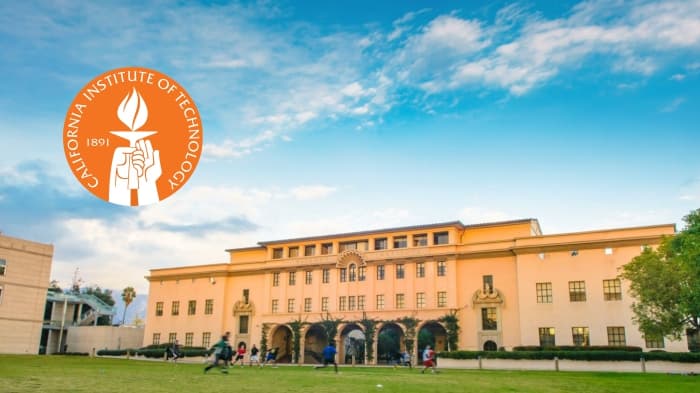
The California Institute of Technology (Caltech) was established in 1891 in Pasadena, California. Operating across an intimate 125-acre campus situated northeast of Los Angeles, Caltech is globally recognized for its concentrated focus on fundamental science, advanced engineering, and technological innovation. In contrast to large multi-disciplinary research universities, Caltech maintains a deliberately small community, enrolling approximately 1,023 undergraduate and 1,440 graduate students supported by an exceptional faculty that has included 38 Nobel Laureates and nearly 60 National Medal of Science recipients.
Caltech oversees significant research infrastructure and national facilities, most prominently NASA’s Jet Propulsion Laboratory (JPL), which Caltech manages for the federal government, the Center for Autonomous Systems and Technology (CAST), and the Center for Data-Driven Discovery (C3D). The university organizes its academic departments under specialized divisions, with the Division of Engineering and Applied Science (EAS) serving as the focal point for engineering innovation. Within this engineering division, executive and professional management education is directed by the Center for Technology and Management Education (CTME). CTME develops high-impact executive curricula, advanced leadership credentials, and international degree collaborations that integrate systems engineering, artificial intelligence, operational logistics, and strategic technology commercialization for global enterprises.
| Institutional Metric | Institutional Profile |
|---|---|
| Year Established | 1891 |
| Campus Location | Pasadena, California, United States |
| Campus Area | 125 Acres |
| Core Executive Education Division | Center for Technology and Management Education (CTME) |
| Parent Academic Division | Division of Engineering and Applied Science (EAS) |
| Affiliated Research Centers | NASA Jet Propulsion Laboratory (JPL), CAST, C3D |
| Student Population | ~1,023 Undergraduate; ~1,440 Graduate |
About the Executive MBA Programs
Candidates examining the educational landscape at Caltech must recognize an important structural reality: the Institute does not maintain an independent, stand-alone business school, nor does it confer an internal, traditional Master of Business Administration degree on its Pasadena campus. Instead, the university deploys its management education through executive certificate programs offered via Caltech CTME, alongside formal international degree alliances.
Through an established partnership, the Caltech executive mba framework is delivered in cooperation with the Vienna University of Technology (TU Wien Academy for Continuing Education). This accredited program—the Executive MBA in Advanced Technologies & Global Leadership—combines European managerial foundations with Caltech’s technical and scientific expertise. Caltech CTME delivers core modular instruction in Pasadena, hosting specialized modules in deep tech, systems engineering, and advanced supply chain management. These Caltech executive mba programs are explicitly structured for technology leaders, replacing broad corporate theory with systems thinking, data-driven financial decision-making, corporate AI integration, and engineering risk management.
Important Dates & Intakes
The cooperative TU Wien–Caltech Executive MBA program operates on a structured schedule designed to support working corporate executives. The primary cohort intake begins in the autumn, supported by continuous recruitment and informational webinars held throughout the academic year.
For prospective executives managing corporate sponsorship and admissions schedules, the final Caltech mba application deadline for the autumn intake is September 13, leading to an official program start on October 22. A secondary cohort cycle processes rolling applications toward a spring start in March. Caltech CTME also conducts recurring on-campus masterclass modules in Pasadena, including systems engineering in late September and early October, supply chain management in late October, and deep tech management in December. The international study tour to South Korea takes place during the following calendar year, typically scheduled for September.
| Program Component / Cohort Intake | Scheduled Dates & Operational Deadlines |
|---|---|
| Autumn EMBA Application Deadline | September 13 |
| Autumn EMBA Program Start | October 22 |
| Spring Intake Start | March |
| Pasadena Systems Engineering Module | Late September to Early October |
| Pasadena Supply Chain Module | Late October to Early November |
| Pasadena Deep Tech Module | December |
| Asia Study Tour (South Korea) | September |
| Monthly Virtual Info Points | Second Friday of each month |
Global Recognition
Caltech consistently ranks among the top ten higher education institutions worldwide across the most respected academic benchmarking indices. The QS World University Rankings positions Caltech 7th globally, a status mirrored in the Times Higher Education (THE) World University Rankings, where it also holds the 7th position. Nationally, U.S. News & World Report places Caltech 7th among national universities. These positions are sustained by the university’s exceptional research citation volume, patent generation, and faculty prestige.
The Executive MBA in Advanced Technologies & Global Leadership carries formal European accreditation from the Swiss Agency of Accreditation and Quality Assurance (aaq), strictly adhering to the Bologna framework with 90 European Credit Transfer and Accumulation System (ECTS) points. In parallel, Caltech CTME holds institutional standing as a Premier Authorized Training Partner (ATP) with the Project Management Institute (PMI) and works closely with major aerospace, defense, and technology corporations to validate technical management credentials globally.
| Ranking Entity / Accreditation Body | Global Standing / Recognition Status |
|---|---|
| QS World University Rankings | Ranked #7 globally |
| Times Higher Education (THE) | Ranked #7 globally |
| U.S. News & World Report National Rankings | Ranked #7 in the United States |
| Academic Degree Accreditation (EMBA) | Swiss Agency of Accreditation and Quality Assurance (aaq) |
| Professional Standards Alliances | PMI Premier Authorized Training Partner; EIT Deep Tech Talent |
Executive Programs: Duration & Fee Structure
The cooperative Caltech executive mba duration is 18 months, structured over three academic semesters and concluding with the defense of a company-sponsored Master’s Thesis. This academic journey represents 90 ECTS credits, distributed over approximately 45 classroom days organized into Thursday-to-Saturday block modules. Non-degree professional certificates administered directly by Caltech CTME range from concentrated short courses lasting 16 to 40 contact hours to multi-month executive post-graduate programs spanning 4 to 12 months.
When analyzing the overall financial investment, Caltech mba fees must be understood within the context of the partner-delivered degree model, standalone CTME professional certificates, and baseline Caltech graduate tuition. The tuition for the cooperative TU Wien–Caltech Executive MBA is €34,890 (approximately $38,000 USD), which covers core academic instruction, digital learning systems, international examination protocols, and Caltech-partnered modules. For comparison, full-time science and engineering graduate tuition at Caltech is $68,574 annually, with mandatory fees of $2,448 bringing total annual tuition and mandatory fees to $71,022.
| Program Pathway | Total Duration | Tuition / Fees | Academic Credential Earned |
|---|---|---|---|
| TU Wien & Caltech CTME Executive MBA | 18 Months (Part-Time, Modular) | €34,890 (~$38,000 USD) | |
| Caltech CTME Advanced Executive Certificates | 4 to 12 Months (Part-Time) | $4,000 – $15,000 | Caltech CTME Executive Certificate & CEUs |
| Caltech CTME Individual Masterclass Courses | 16 to 40 Hours (Blocked Format) | $1,310 – $3,500 per course | Professional Development Units (PDUs) |
| Caltech Full-Time Graduate Degree (Reference) | 1 to 2 Years (M.S.) / 4 to 5 Years (Ph.D.) | $71,022 per year | Master of Science (M.S.) / Ph.D. |
| Program | Duration | Fee | Format |
|---|---|---|---|
| Prototype to Product: Shipping AI That Works | 12 hours | $1,980 | Online |
| AI Tools for Everyone: A Hands-On Learning Lab | 8 hours | Free | Online |
| AI for Executives: Rapid Blueprinting for Organizational Adoption | 9 hours | $990 | Online |
| Claude Code Agent Lab | 4 hours | $590 | Online |
| AI for Project Management: A Hands-On Learning Lab | 16 hours | $1,200 | Online |
| Model-Based Systems Engineering Fundamentals (MBSE) | 48 hours | $3,900 | Online |
| Systems Engineering Fundamentals | 40 hours | $3,550 | Online |
| Transitioning Models to SysML v2 with MBSE | 24 hours | $2,750 | Online |
| Model-Based Systems Engineering Fundamentals using SysML v2 | 48 hours | $3,900 | Online |
| Advanced Model-Based Systems Engineering (AMBSE) | 48 hours | $3,900 | Online |
| Leadership Essentials | 80 hours | $6,550 | Online |
| Advanced Project Management (APM) | 80 hours | $6,550 | Online |
| Project Management | 35 hours | $2,600 | Online |
| Managing New Product Development | 16 hours | $1,310 | Online |
| Agile Project Management | 36 hours | $4,050 | Online |
Note: Course details may change. Visit the official website for the latest updates.
Online & Hybrid Executive MBA Programs
To support the operational schedules of senior managers and directors, the cooperative Executive MBA uses a hybrid delivery model that balances online learning with in-person residencies. Foundational quantitative work, theoretical management coursework, and asynchronous project preparation are completed through virtual portals, allowing executives to maintain their standard workplace responsibilities between campus immersions.
The physical classroom residencies take place across three international innovation centers: European management modules are conducted at TU Wien in Vienna, deep tech and systems engineering modules are held on the Caltech campus in Pasadena, and a comprehensive field study is undertaken in South Korea. Alongside this hybrid degree path, Caltech CTME offers standalone executive certificates through live-online synchronous Zoom classes and self-paced digital platforms, enabling remote professionals to earn Caltech credentials without international relocation.
| Phase Sequence | Instructional Format | Primary Geographic Location | Core Curricular Focus |
|---|---|---|---|
| Phase 1: Foundation | Online Asynchronous & Live-Online | Remote / Digital Delivery | Preparatory quantitative and strategic business frameworks |
| Phase 2: Management Core | On-Campus Block Modules | TU Wien (Vienna, Austria) | Data-driven decision-making, organizational behavior, financial modeling |
| Phase 3: Deep Tech Modules | On-Campus Intensive Residencies | Caltech CTME (Pasadena, USA) | Applied AI, systems architecture, technology commercialization |
| Phase 4: Global Field Study | International Executive Immersion | South Korea (Seoul, Daejeon, Busan) | Asian deep tech ecosystems, manufacturing scale, robotics |
| Phase 5: Master’s Thesis | Independent Research & Defense | Remote / Hybrid Supervision | Applied corporate capstone addressing enterprise challenges |
Who These Specialisations Are Best Suited For
The executive specializations affiliated with Caltech are structured for experienced technical professionals, engineering directors, and operational leaders responsible for implementing complex technologies. Unlike general business programs, the curriculum assumes a strong analytical background and focuses on translating technical advances into measurable business performance.
The Deep Tech and Advanced Technologies specialization is designed for Chief Technology Officers, R&D directors, and senior product development leaders evaluating emerging technologies such as generative artificial intelligence, quantum computing, autonomous robotics, and synthetic biotechnology. This track helps executives build commercialization strategies, structure intellectual property portfolios, and adapt organizational designs to rapid technical shifts.
The Systems Engineering and Model-Based Systems Engineering (MBSE) track is tailored for chief engineers, technical program directors, and lead system architects working in aerospace, defense, automotive, and telecommunications. This curriculum emphasizes lifecycle risk management, agile development frameworks, and digital engineering processes necessary to manage large, mission-critical systems.
The Operations and Supply Chain specialization serves Chief Operating Officers, procurement leaders, and logistics directors tasked with building resilient production networks in volatile geopolitical environments. Participants explore modern supplier management, technology-driven logistics, and automation, providing the strategic tools required to maintain operational stability during market and supply disruptions.
Eligibility Criteria & Work Experience
Admission to executive programs associated with Caltech requires demonstrated academic capability and proven professional achievement. Under the Caltech executive mba eligibility standards established for the collaborative degree, applicants must hold an undergraduate degree from a recognized university in engineering, natural sciences, computer science, mathematics, or business-related disciplines.
Professional experience is a central evaluation criterion. Applicants must possess at least three years of documented full-time professional experience following completion of their undergraduate degree, though admitted cohorts typically average 7 to 12 years of industry tenure. Preference is extended to candidates who have managed technical teams, overseen operational budgets, or directed complex technical programs.
Candidates must also demonstrate English proficiency, as all classroom instruction, collaborative cohort projects, and the Master’s Thesis are conducted in English. Finally, applicants must show corporate sponsorship or independent financial backing to support the modular travel residencies and tuition fees. For non-degree certificate programs through Caltech CTME, open enrollment policies apply without formal degree verification, although advanced courses require prior technical or programming familiarity.
Admission Requirements & Application Process
The Caltech executive mba admission process uses a holistic evaluation methodology that assesses an applicant’s intellectual background, technical competence, and leadership potential. The admissions committee looks for candidates capable of contributing meaningful, industry-informed perspectives to executive seminar discussions.
Candidates must fulfill several Caltech executive mba requirements by submitting a comprehensive application portfolio. This dossier must include an up-to-date professional curriculum vitae highlighting career growth and technical achievements, certified copies of academic degrees and transcripts, and a detailed statement of purpose explaining how the program will support the applicant's leadership goals and potential master's thesis research. Applicants must also provide professional letters of recommendation attesting to their leadership skills and analytical abilities, alongside English language test results (minimum TOEFL iBT score of 100 or IELTS band 7.0) if their prior instruction was not in English.
Standardized assessments like the GMAT or GRE are generally not required for executive applicants with demonstrated industry tenure. Once an application passes initial screening, candidates are invited to an executive admissions interview with the Academic Director, which evaluates communication skills, analytical reasoning, and fit with the executive cohort.
| Application Milestone | Required Documents & Commitments | Evaluation Objectives |
|---|---|---|
| Phase 1: Initial Dossier Submission | Comprehensive CV, Academic Transcripts, Degree Certificates | Verifies academic qualifications and prerequisite experience |
| Phase 2: Qualitative Review | Statement of Intent, Corporate/Academic Letters of Support | Evaluates strategic motivation, thesis intent, and leadership promise |
| Phase 3: Language Verification | TOEFL iBT (100+), IELTS (7.0+), or Medium-of-Instruction Proof | Confirms academic and professional English fluency |
| Phase 4: Executive Interview | Personal Video or On-Site Interview with Program Leadership | Evaluates executive presence, cohort dynamics, and peer contribution |
| Phase 5: Admissions Decision | Formal Letter of Acceptance and Program Enrollment Agreement | Confirms cohort seat and outlines matriculation steps |
Faculty Details & Expertise
Instruction within Caltech’s executive and management network is led by senior researchers, industry advisors, and executive directors who connect foundational science with corporate execution. Unlike typical business school faculties that teach business theory in isolation, these educators integrate active engineering research, space exploration missions, and technology consulting into the curriculum.
Dr. Rick Hefner serves as the Executive Director of Caltech CTME, bringing over 45 years of systems engineering, process optimization, and technology management experience across more than 50 Fortune 500 companies and government agencies. He earned his Ph.D. in applied dynamic systems control from UCLA and has held academic, research, and corporate consulting appointments focused on systems engineering and agile transformation.
Univ.-Prof. Dr. Wolfgang Güttel serves as the Academic Director at the TU Wien Academy for Continuing Education, teaching strategic management, leadership in data-driven environments, and organizational change. Alan Dunn, a Lecturer at Caltech CTME, leads executive modules in global operations, supply chain resilience, and advanced manufacturing management.
Dr. Tony Freeman, a Senior Formulation Leader at NASA’s Jet Propulsion Laboratory and Caltech CTME educator, holds a Ph.D. in astrophysics from the University of Manchester and is an IEEE Life Fellow, contributing deep expertise in mission formulation, space systems, and complex project direction. Dr. Kenneth L. Preston, a Boeing Designated Expert with a Doctor of Business Administration and an extensive physics background, provides instruction in systems integration, risk management, and defense program leadership. Dr. Andrew Sharman specializes in high-reliability organizational culture, risk management, and executive safety leadership, while Dr. Jonathan Cheung applies his USC neurobiology doctoral training and corporate data science experience to help executives understand artificial intelligence systems and machine learning deployment.
Research Opportunities
Although executive management education prioritizes commercial execution over laboratory discoveries, participants engage directly with Caltech’s world-class research ecosystem. During the Pasadena residency, executives tour and interact with researchers at the Center for Autonomous Systems and Technology (CAST), where novel autonomous drones, robotic locomotion, and space exploration technologies are developed. Participants also explore research initiatives at the Center for Data-Driven Discovery (C3D), examining big data management, visualization architectures, and machine learning infrastructure.
A core academic component of the collaborative Executive MBA is the Master’s Thesis, which serves as an applied, company-focused research initiative. Rather than writing theoretical academic papers, executives identify an active, strategic technical challenge within their sponsoring organization and develop an actionable solution under joint faculty supervision. Typical thesis projects explore deploying generative artificial intelligence within secure enterprise IT architectures, implementing Model-Based Systems Engineering across aerospace product lifecycles, or reconfiguring international supply networks to mitigate geopolitical exposure.
Scholarships
Financial aid structures for executive programs differ significantly from standard doctoral fellowships and undergraduate grants, which are generally reserved for full-time degree candidates on campus. Prospective students evaluating Caltech mba scholarships have access to several targeted funding avenues, employer assistance programs, and statutory tax mechanisms:
Corporate tuition sponsorship remains the primary financing pathway for both Caltech CTME courses and the cooperative Executive MBA. Caltech CTME routinely processes direct employer payments, corporate vouchers, and educational benefits from major defense and technology contractors like Boeing and RTX. In addition, the TU Wien Academy offers partial merit- and need-based tuition waivers to qualifying applicants in the Executive MBA program to foster diversity across technical leadership, with particular emphasis on underrepresented demographics and deep tech founders.
Tax deductibility also provides a substantial financial offset in many jurisdictions. For executives subject to taxation in Austria, Germany, and several other European nations, professional master's program fees are recognized as continuing education expenses, allowing participants to deduct up to 50% of the total program cost from their taxable income. The program administration also provides flexible, multi-stage installment plans that allow self-funding candidates to amortize tuition payments across three academic terms rather than paying the full balance upfront.
Accommodation & Living Expenses
Executives attending modular on-campus residencies in Pasadena must budget for executive accommodations, regional dining, and international transit during each short-term residency. While on campus, executives may stay at The Athenaeum—Caltech’s historic private faculty club established in 1930—or use partner executive hotels in downtown Pasadena, which provide convenient access to campus and nearby research centers.
The living expenses for modular executive students differ markedly from full-time graduate budgets, as executives live in their home regions and travel only for short instructional bursts. Full-time graduate students residing in Pasadena typically budget around $34,174 per year to cover shared housing, groceries, utilities, and mandatory healthcare plans. In contrast, executive MBA candidates plan for short-term accommodations in California, Austria, and South Korea, where executive-tier lodging typically averages $200 to $350 per night, alongside regional dining, travel insurance, and international flights.
| Expense Category | Modular Executive Residency (Est. 2-Week Pasadena Block) | Baseline Full-Time Graduate Benchmark (Annual Pasadena Budget) |
|---|---|---|
| Housing / Hotel Lodging | $2,500 – $4,200 | $12,711 – $14,733 |
| Food & Executive Dining | $1,000 – $1,600 | $8,586 – $9,285 |
| Local / International Travel | $1,500 – $3,000 | $1,500 – $2,000 |
| Books & Modular Materials | $300 – $600 | $1,428 |
| Health & Travel Insurance | Short-Term Comprehensive Travel Coverage | $4,998 – $5,388 |
| Estimated Total Outlay | $5,300 – $9,400 per residency cycle |
Placements, Employability & Career Opportunities
Executive degree and certificate candidates affiliated with Caltech experience substantial career advancement, leveraging the institution’s prestige in engineering and technical innovation. Because executive cohorts consist of working professionals, career progression centers on internal promotions, ascension to senior management, or founding new technology ventures, rather than standard on-campus recruitment pipelines.
Graduates report strong career momentum, often advancing from technical engineering leads or product managers into senior roles with full profit-and-loss (P&L) and operational oversight. Compensation studies for Caltech master's and executive program graduates show strong earnings trajectories: while median starting salaries for standard Master of Science graduates average $120,000 to $150,000, mid-career executive master's degree holders and senior engineering leaders report median compensation figures reaching $195,000, frequently supplemented by executive stock options and performance bonuses.
Career Opportunities After an Executive MBA
Completing an engineering-focused Executive MBA prepares professionals for senior leadership positions at the intersection of business strategy and technical development. Industry data tracking Caltech mba careers and executive technology graduates demonstrates substantial career mobility across aerospace, defense contracting, advanced enterprise cloud systems, artificial intelligence infrastructure, clean technology, and technology management consulting.
Executives moving through these programs frequently transition into Chief Technology Officer roles, where they oversee enterprise technical architecture, guide R&D investments, and direct product development. Others step into Vice President of Engineering or Chief Systems Architect positions, taking charge of complex development programs, cross-functional engineering teams, and enterprise digital engineering practices.
The curriculum also prepares executives for roles as Vice Presidents of Operations and Supply Chain Directors, where they oversee advanced manufacturing, global procurement, and supply resilience. Experienced professionals may also pursue careers as Managing Technology Consultants, advising global clients on digital transformation, AI governance, and modernization, while others leverage their training to launch and scale deep-tech startups backed by venture capital.
| Executive Target Role | Core Strategic Responsibilities | Primary Industry Verticals |
|---|---|---|
| Chief Technology Officer (CTO) | Strategic technical roadmaps, R&D allocation, intellectual property | Enterprise SaaS, Space Tech, Deep Tech |
| VP of Systems Engineering | Large-scale architecture integration, lifecycle verification | Aerospace, Defense, Automotive, Robotics |
| VP of Supply Chain & Operations | Resilient logistics, vendor management, lean operations | Advanced Manufacturing, Semiconductors |
| Director of Artificial Intelligence | Enterprise AI scaling, governance, machine learning ops | Telecommunications, FinTech, MedTech |
| Managing Technology Consultant | Enterprise transformation, technology transfer, M&A due diligence | Strategic Management Consulting, Professional Services |
Alumni Network
Alumni of Caltech’s executive initiatives and collaborative degree programs gain access to influential professional networks across technical and managerial fields. Graduates of the cooperative Executive MBA join the TU Wien Academy Alumni network while maintaining permanent connections with Caltech CTME Circles, receiving invitations to ongoing executive events and masterclass series.
This global alumni network spans major engineering and technology clusters across North America, Europe, and Asia. CTME program participants and alumni hold leadership roles at premier organizations including Boeing, Northrop Grumman, Raytheon (RTX), NASA’s Jet Propulsion Laboratory, Google, Microsoft, and specialized biotechnology firms. These connections foster ongoing professional collaboration, peer mentoring, and corporate partnerships, helping graduates navigate complex business environments and pursue new commercial ventures throughout their careers.
Global Exposure & International Opportunities
The cooperative Executive MBA provides international perspective by embedding participants in three distinct technology and business ecosystems. By holding residencies across three continents, the program exposes executives to different regulatory, technological, and corporate environments:
In Vienna, Austria, at TU Wien, participants examine European corporate frameworks, cross-border business regulations, sustainability standards, and modern policies like the EU AI Act. In Pasadena, California, at Caltech CTME, executives immerse themselves in the Southern California aerospace and deep-tech ecosystem, exploring advanced systems engineering, commercial space formulation, and technology venture creation. Finally, during the international study tour to South Korea, participants visit dynamic industrial hubs across Seoul, Daejeon, and Busan, touring advanced manufacturing lines, robotics facilities, and deep-tech startups to study high-speed execution and manufacturing scale.
| Study Residency Location | Regional Innovation Focus | Core Experiential Learning Activities |
|---|---|---|
| Vienna, Austria (TU Wien) | European corporate governance and multinational strategy | Executive lectures, policy analysis, cross-cultural leadership |
| Pasadena, USA (Caltech CTME) | Frontier deep tech, systems engineering, space systems | CAST robotics lab visits, JPL mission lectures, MBSE workshops |
| Seoul & Daejeon, South Korea | East Asian manufacturing, robotics, and hardware scale | Industrial factory tours, deep tech startup roundtables, incubator visits |
Advantages of Pursuing an Executive MBA from a Global University
Choosing an executive program connected to a premier scientific and technical university like Caltech offers several distinct advantages over standard business school degrees. Traditional MBA programs often approach business strategy through high-level financial and marketing abstractions. In contrast, a program anchored in Caltech's engineering culture integrates business strategy directly with technical mechanics, systems architecture, and empirical data analysis.
The international reputation of the Caltech name gives graduates immediate credibility in technical, research-driven, and mission-critical industries. The university's track record of scientific excellence reassures corporate boards and investors that an executive understands both technological realities and business requirements.
Furthermore, because the program requires strong analytical skills, cohorts consist of experienced engineering managers, systems architects, and technical directors, which elevates classroom discussions beyond general corporate overviews to deep, practical debates on implementation. Finally, the curriculum delivers immediate return on investment through the applied Master’s Thesis, which requires candidates to address a major technical or operational challenge within their sponsoring enterprise, often generating financial returns that exceed program costs.