August 14th, 2026
Indian School of Business (ISB), Hyderabad
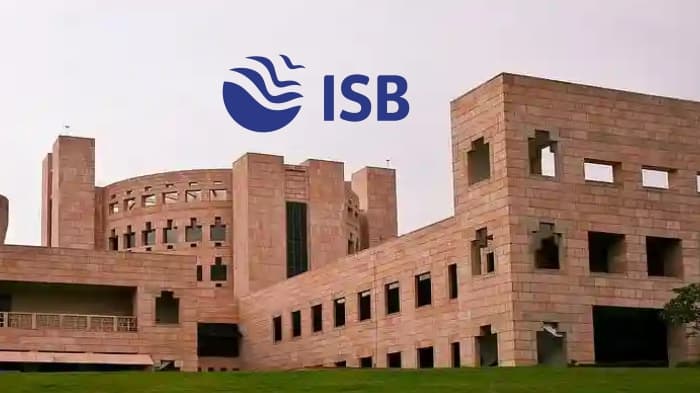
The Indian School of Business (ISB) was founded in 2001 in Hyderabad, Telangana, as a private, non-profit management institution designed to establish world-class business education within South Asia. The establishment of the school was spearheaded by corporate leaders in partnership with global management consulting firm McKinsey & Company, alongside permanent academic ties with founding associate institutions: the Wharton School at the University of Pennsylvania, the Kellogg School of Management at Northwestern University, and the London Business School. ISB subsequently expanded its operational footprint through the launch of its second campus in Knowledge City, Mohali, Punjab, in 2012, operating both locations under a unified "One School, Two Campuses" model.
ISB holds "Triple Crown" accreditation from the Association to Advance Collegiate Schools of Business (AACSB), the European Quality Improvement System (EQUIS), and the Association of MBAs (AMBA). It was notably the first business school in South Asia to earn AACSB accreditation. In international league tables, ISB maintains prominent positioning.
While ISB built its global academic reputation through its full-time 1-year PGP, the institution has engineered a specialized portfolio of working-professional management degrees managed via its Centre for Executive Education. These executive offerings center on two primary academic tracks: the Post Graduate Programme in Management for Working Professionals (PGPpro) and the Post Graduate Programme in Management for Senior Executives (PGPMAX).
| Institutional Dimension | Key Performance Metric / Historical Attribute |
|---|---|
| Year of Establishment | 2001 (Hyderabad Campus); 2012 (Mohali Campus) |
| Founding Academic Partners | Wharton School, Kellogg School of Management, London Business School |
| Subsequent Affiliations | MIT Sloan School of Management, The Fletcher School at Tufts University |
| Global Accreditations | Triple Crown: AACSB, EQUIS, AMBA |
Specializations Offered and Areas of Domain Expertise
The academic framework of ISB’s executive management programs balances functional foundational core requirements with tailored elective specialization tracks. Unlike traditional two-year MBA programs that enforce rigid functional silos, ISB employs an integrative curriculum model where participants master foundational disciplines—such as managerial accounting, corporate finance, competitive strategy, managerial economics, organizational behavior, and statistical decision-making—before selecting specialized concentrations.
Specialization Concentrations
The Finance and Accounting specialization focuses on advanced corporate finance, international financial risk management, strategic valuation, capital structure optimization, mergers and acquisitions, and executive decision-making under macroeconomic uncertainty. This domain is structured specifically to prepare mid-to-senior professionals for CFO roles, corporate treasury positions, investment management, or vice-presidencies in corporate finance.
The Strategy and Leadership concentration centers on corporate portfolio management, disruptive business innovation, global market entry strategies, strategic alliances, crisis management, and board-level governance. Courses in this vertical emphasize cross-functional synthesis, training executives to lead large-scale organizational transformations and manage complex stakeholder environments.
The Marketing and Consumer Insights concentration addresses contemporary digital marketing strategies, brand architecture management, customer lifetime value analytics, e-commerce dynamics, and go-to-market strategies for emerging markets. It integrates quantitative statistical inference with qualitative consumer psychology to prepare functional leads for CMO and commercial leadership roles.
The Analytics and Operations Management track targets digital enterprise transformation, strategic supply chain architecture, operational decision models, big data frameworks, and technology management. This concentration equips senior technical managers, CTOs, and operations leaders to modernize core corporate operations using enterprise artificial intelligence and advanced quantitative modeling.
The Entrepreneurship and Family Business concentration provides targeted training in venture scaling, corporate entrepreneurship, private equity funding, succession planning, and corporate governance. Supported by dedicated research infrastructure, this specialization serves founders, startup leaders, and second-generation family enterprise successors aiming to professionalize legacy businesses.
Institutional Domain Expertise
ISB is recognized globally for its expertise in strategy, leadership in emerging markets, technology enterprise management, and family business governance. The institution’s strategic frameworks are explicitly tailored to address the unique complexities of doing business in fast-growing economies, where regulatory volatility, infrastructure bottlenecks, and digital disruption require adaptive managerial paradigms.
Through the Thomas Schmidheiny Centre for Family Enterprise, ISB has pioneered academic research and executive training in family business management, addressing the governance and succession challenges characteristic of promoter-driven business groups in South Asia. Additionally, the school’s strategic alignment with global technology ecosystems positions it as a premier institution for executive education in digital strategy, tech-led operations, and enterprise innovation.
| Specialisation Concentration | Core Academic Focus | Primary Target Executive Roles |
|---|---|---|
| Finance & Accounting | Corporate valuation, M&A, risk management, strategic CFO frameworks | CFO, VP Finance, Treasury Director, Investment Lead |
| Strategy & Leadership | Global market strategy, board governance, corporate transformation | Managing Director, CEO, Business Unit Head, VP Strategy |
| Marketing & Consumer Insights | Digital brand strategy, consumer analytics, market entry planning | Chief Marketing Officer, VP Sales, Commercial Director |
| Analytics & Operations | Supply chain optimization, decision modeling, digital transformation | Chief Operating Officer, CTO, VP Operations, Supply Chain Lead |
| Entrepreneurship & Family Firm | Enterprise scaling, venture funding, succession, family governance | Startup Founders, Family Business Successors, Managing Partners |
Program Architecture, Fee Structures, and Duration
ISB structures its academic programs around specific career stages, ensuring that cohort experience levels, academic depth, and delivery formats match the professional needs of participants.
| Feature | Full-Time Track (PGP) | Mid-Career Executive Track (PGPpro) | Senior Executive Track (PGPMAX) |
| Programme Duration | 12 Months (Full-Time) | 18 Months (Part-Time) | 15 Months (Modular) |
| Work Experience Required | 2–7 Years | 5–12 Years | 10–25 Years |
| Delivery Format | Mandatory Residential | Alternate Weekend Delivery | 12 Campus Residency Weeks |
| Campus Structure | Residential Programme | Multi-City Distribution | Dual Campus (Hyderabad & Mohali) |
| Placement Support | Full Placement Support | No Placement Drive | No Placement Drive |
| Admission Requirement | GMAT/GRE Required | No GMAT/GRE Requirement Mentioned | No GMAT/GRE Requirement Mentioned |
Academic Program Architecture
The Post Graduate Programme in Management (PGP) is a 12-month, full-time residential management program engineered for early-to-mid career professionals with an average of 4 to 5 years of work experience. It requires a full-year career break and a valid GMAT or GRE score, focusing heavily on accelerated skill acquisition, functional pivots, and immediate post-MBA campus placements.
The Post Graduate Programme in Management for Working Professionals (PGPpro) is an 18-month, part-time executive management program designed for mid-level managers with 5 to 12 years of experience. Delivered on alternate weekends across four major urban centers—Hyderabad, Delhi-NCR, Mumbai, and Bangalore—PGPpro enables professionals to earn a management credential without taking a career break.
The Post Graduate Programme in Management for Senior Executives (PGPMAX) is a 15-month executive MBA equivalent program designed for senior leaders, VPs, CXOs, and entrepreneurs with 10 to 25 years of professional experience. Delivered via intensive one-week campus residencies every six weeks across the Hyderabad and Mohali campuses, PGPMAX focuses on enterprise leadership, strategic governance, and global expansion.
The Post Graduate Programme in Family Business Management (PGP MFAB) is a 15-month modular executive program structured for family business owners and successors, focusing on legacy transformation, corporate governance, and venture expansion.
Financial Investment and Fee Breakdown
Pursuing an executive credential at ISB involves a substantial capital investment. For the 2026–27 academic cycle, the base tuition fee for PGPpro is ₹31,51,000, which, when combined with 18% GST (₹5,67,180), results in a total financial outlay of ₹37,18,180. This fee covers tuition, course materials, administrative infrastructure, and international immersion instruction.
The total fee for PGPMAX for the 2026–27 academic year is ₹41,78,000 plus 18% GST (amounting to ₹7,52,040 in taxes) and a refundable security deposit of ₹20,000, bringing the cumulative outlay to ₹49,50,040. This cost includes executive single-occupancy accommodation and dining during the 12 campus residency weeks, course materials, lifetime access to the Learning Resource Centre (LRC), and tuition for international immersion modules.
| Programme | Total Duration | Target Work Experience | Base Tuition / Program Fee | Total Financial Outlay (incl. GST) |
|---|---|---|---|---|
| Full-Time PGP | 12 Months | 2 to 7 Years (Avg: 4–5 yrs) | ₹25,62,000 (Tuition Base) | ₹38.67L – ₹42.42L (incl. hostel) |
| Executive PGPpro | 18 Months | 5 to 12 Years (Avg: 8–10 yrs) | ₹31,51,000 | ₹37,18,180 |
| Executive PGPMAX | 15 Months | 10 to 25 Years (Avg: 16–18 yrs) | ₹41,78,000 / ₹41,98,000 | ₹49,30,040 / ₹49,50,040 |
| PGP MFAB | 15 Months | Family Business (0–5+ yrs) | ₹39,13,000 | ₹42,13,000 – ₹49,91,000 |
PGPMAX Fee Payment Schedule (2026–27 Academic Cycle)
Fees for executive programs are paid in structured installments spread across the program lifecycle.
| Instalment Phase | Base Amount (₹) | Applicable GST @ 18% (₹) | Total Instalment Outlay (₹) | Scheduled Due Date |
|---|---|---|---|---|
| Admission Fee | ₹3,00,000 | ₹54,000 | ₹3,54,000 | Upon Offer Acceptance |
| 1st Instalment + Security Deposit | ₹9,69,500 + ₹20,000 | ₹1,74,510 | ₹11,64,010 | May 31, 2026 |
| 2nd Instalment | ₹9,69,500 | ₹1,74,510 | ₹11,44,010 | September 30, 2026 |
| 3rd Instalment | ₹9,69,500 | ₹1,74,510 | ₹11,44,010 | January 28, 2027 |
| 4th Instalment | ₹9,69,500 | ₹1,74,510 | ₹11,44,010 | July 15, 2027 |
| Cumulative Total | ₹41,98,000 | ₹7,52,040 | ₹49,50,040 | Throughout Tenure |
Mode of Teaching, Pedagogy, and Executive Delivery Formats
ISB employs a pedagogy tailored for experienced working professionals. The instructional model integrates case studies, software-based business simulations, Action Learning Projects, interactive lectures, and executive peer coaching.
| Feature | PGPpro Delivery Format | PGPMAX Delivery Format |
| Programme Duration | 18-month continuous delivery | 15-month modular delivery |
| Class Schedule | Alternate weekend classes (Saturday & Sunday) | 12 on-campus residency weeks (1 week every 6 weeks) |
| Delivery Locations | Four multi-city delivery hubs: Hyderabad, Delhi, Mumbai, and Bengaluru | Alternating campuses at Hyderabad and Mohali |
| Residential Modules | Four full-week residential campus modules | 12 on-campus residency weeks integrated into the programme |
| International Exposure | One international immersion week | One to two international immersion weeks |
| Learning Format | Weekend-based, part-time executive learning with periodic campus residencies | Modular executive format with campus residencies, 508 contact hours, and pre-course online modules |
Instructional Methodology
Teaching across both executive programs relies heavily on the case method, drawing case studies from Harvard Business Publishing, INSEAD, and ISB’s internal research centers. These case studies place executives in the position of business decision-makers, requiring them to solve real-world strategic, financial, and operational challenges.
Software-driven business simulations test participant leadership and analytical decision-making under simulated market conditions. Executive participants work individually or in teams to manage virtual enterprises, adjusting pricing, marketing spend, capital investments, and supply chain logistics in response to competitive pressures.
Through Action Learning Projects, participants apply theoretical frameworks directly to live operational challenges within their sponsoring companies or industries. This model ensures immediate organizational return on investment, allowing executives to test classroom learning in real time.
Program Delivery Formats
PGPpro is delivered over 18 months via alternate weekend classes held on Saturdays and Sundays across four regional hubs: Hyderabad, Delhi-NCR, Mumbai, and Bangalore. This multi-city distribution allows mid-career professionals to attend in-person classes near their working locations. The program includes four mandatory full-week residential modules at ISB’s Hyderabad campus and one international immersion week at a global partner business school. Over the 18-month duration, participants typically take approximately 15 full working days away from their jobs.
PGPMAX is delivered over 15 months through a modular structure consisting of 12 intensive on-campus residency weeks. Executives gather on campus roughly every six weeks for full-day, Monday-through-Saturday residency modules split between ISB’s Hyderabad and Mohali campuses. The program includes 508 contact hours and features 1 to 2 international immersion weeks hosted at partner business schools, such as Wharton, Kellogg, or London Business School. Between campus residencies, participants complete pre-course readings, quantitative preparatory modules, and team assignments alongside their ongoing professional responsibilities.
Eligibility Criteria, Experience Requirements, and Admission Mechanics
Admissions for ISB’s executive management programs rely on holistic profile evaluations rather than standardized entrance testing.
| Professional Progression | Leadership Evidence | Academic & Recommendations |
| Quality of Career Track | Scope of Managerial Authority | Accredited Bachelor's Degree |
| Track Record of Achievements | Team, Budget & P&L Oversight | Two Professional Referees |
| Demonstrated Business Impact | Enterprise & Strategic Scope | Essays & On-Spot Assessments |
Eligibility Mandates and Experience Profile
Candidates for PGPpro must hold a Bachelor’s degree or equivalent professional qualification (such as CA or ICWA) and possess a minimum of 5 years of full-time post-qualification work experience as of the program start date. The average work experience of admitted cohorts ranges from 8 to 12 years. GMAT or GRE test scores are not required; selection focuses on professional accomplishments, managerial growth, and career progression.
Candidates for PGPMAX must hold a Bachelor’s degree or equivalent and possess a minimum of 10 years of full-time post-qualification work experience. Admitted participants average 16 to 18 years of work experience, with a minimum requirement of 3 to 5 years spent in senior management roles overseeing teams, budgets, projects, or enterprise operations. Standardized entrance exams are waived. Sponsored corporate candidates must submit an official employer support letter confirming that their organization will grant leave for the 12 residential campus weeks.
Evaluation Focus and Application Process
Applications for executive programs are submitted through an online portal that requires academic transcripts, a detailed professional resume, personal essays, and two professional recommendations. PGPMAX applicants must also complete mandatory on-the-spot essays during the interview stage to demonstrate critical thinking, clarity of thought, and strategic alignment.
The admissions committee evaluates candidates based on professional track record quality, demonstrated managerial leadership, clarity of post-program career goals, and cohort contribution potential. Shortlisted applicants undergo a formal interview conducted by a panel of senior ISB faculty, alumni executives, and industry leaders.
| Criteria Dimension | Executive PGPpro Track | Executive PGPMAX Track |
|---|---|---|
| Minimum Academic Qualification | Bachelor’s Degree or equivalent (CA/ICWA) | Bachelor’s Degree or equivalent |
| Minimum Work Experience | 5 Years full-time post-graduation | 10 Years full-time post-graduation |
| Cohort Experience Profile | Average 8–12 Years (Age 31–35) | Average 16–18 Years (Age 38–40) |
| Mandatory Managerial Requirement | Demonstrated team or project leadership | 3–5+ Years in senior management / P&L roles |
| Standardized Test Score | Not Required (GMAT/GRE Waived) | Not Required (GMAT/GRE Waived) |
| Employer Consent Letter | Time commitment confirmation | Official organizational leave approval letter |
| Selection Components | Application, 2 LORs, Essays, Interview | Application, 2 LORs, On-spot essays, Interview |
Employability, Career Outcomes, and Placement Architecture
A critical distinction of ISB's executive programs (PGPpro and PGPMAX) is the deliberate absence of a formal campus recruitment process or placement drive.
| Full-Time PGP Placement Engine | Executive MBA Career Acceleration |
| Dedicated Career Services Office | No formal campus placement drive |
| On-campus recruitment and placement days | Designed for in-career acceleration |
| Engineered for role and industry switches | Protects sponsoring employer commitments |
| Median salary outcome: ₹35+ LPA | Focuses on internal mobility, promotions, and P&L expansion |
| 1,164 offers from 364 companies (2025) | Access to the private ISB Alumni Job Portal |
Strategic Rationale for Excluding Campus Placements
The exclusion of formal placements in PGPpro and PGPMAX is a deliberate design choice that aligns with the career stage of executive participants.
Because many executive candidates receive corporate sponsorship or official leave approvals from their employers, introducing campus placement drives would create conflict of interest. The non-placement structure allows enterprises to fund high-potential executives without flight-risk concerns.
While full-time MBA programs (such as ISB’s 1-year PGP) are structured for career switches—helping early-career professionals pivot across functions or industries—Executive MBAs focus on in-career acceleration. The goal is to help professionals ascend into general management, VP, or C-suite roles within their existing sectors or organizations.
Senior executive hiring at the VP, Director, or CXO level rarely occurs through bulk campus placement drives. Executive recruitment relies on headhunters, executive search firms, internal succession pathways, and board-level networking.
Career Support and Post-Program Advancement
Although ISB does not run formal placement drives for executive cohorts, it provides career progression support. Graduates gain access to the private ISB Alumni Job Portal, where companies and executive recruitment firms post mid-to-senior lateral hiring opportunities. PGPMAX candidates also receive individualized leadership coaching, executive resume evaluations, and peer-to-peer mentoring.
Graduates frequently experience salary growth and career advancement following completion of the program. This mobility occurs through internal promotions, expanded P&L responsibilities, or lateral executive transitions. PGPMAX graduates regularly transition into general manager, VP, country head, or CXO roles, commanding senior executive compensation packages ranging from ₹60 Lakhs to ₹2 Crores+ annually.
By contrast, the full-time PGP program operates a traditional campus placement process. For the Class of 2025, full-time PGP graduates received 1,164 offers from 364 recruiting organizations, securing a median salary exceeding ₹35 LPA.
Faculty Model and Research Ecosystem
ISB’s academic model combines permanent resident scholars with visiting faculty from prominent international business schools.
Resident Faculty Pool | Visiting Global Faculty |
| 70+ full-time resident professors | 200+ international visiting professors |
| 100% doctorate-qualified scholars | Faculty drawn from leading global institutions such as Wharton, Kellogg, London Business School (LBS), MIT, and others |
| Deep expertise in emerging market research | Brings global management frameworks and international case studies into the classroom |
| ISB is ranked #1 in India for research quality | Active collaboration through joint research grants, academic exchanges, and cross-institutional partnerships |
The Portfolio Faculty Structure
The faculty model balances contextual emerging-market research with international management practices.
ISB maintains a core pool of over 70 full-time resident faculty members across its Hyderabad and Mohali campuses. All resident faculty hold doctorates from leading international institutions. Their research focuses on Indian business fundamentals, emerging market growth, corporate governance, and public policy.
ISB supplements its resident scholars with a network of over 200 visiting professors drawn from global business schools, including Wharton, Kellogg, London Business School, MIT Sloan, Stanford, Haas, Chicago Booth, and HEC Paris. These visiting faculty teach core and elective modules at ISB, bringing international case studies and global business frameworks directly into the classroom.
Academic Research Centers
ISB ranks 1st in India for management research quality according to Financial Times evaluations. Research activity is led by specialized institutes that integrate industry insights into the executive curriculum:
- Thomas Schmidheiny Centre for Family Enterprise: Focuses on corporate governance, succession planning, and growth strategies for family business groups.
- Bharti Institute of Public Policy: Researches governance, public infrastructure financing, and public-private policy implementation.
- Max Institute of Healthcare Management: Focuses on healthcare delivery models, health-tech innovation, and global pharmaceutical supply chains.
- Mack Institute for Innovation Management: Operated in partnership with the Wharton School, focusing on enterprise technology commercialization and corporate digital transformation.
Alumni Ecosystem and Industry Leadership
ISB’s alumni network comprises over 15,000 Post Graduate Programme graduates, alongside tens of thousands of executive education alumni across 60+ countries. In the Financial Times Executive MBA Rankings, ISB’s alumni network is ranked 8th globally, reflecting its reach across corporate C-suites, tech unicorns, and private equity firms.
Corporate Leadership | Tech Unicorn Founders | Public Sector & Media |
| C-Suite executives at multinational corporations (MNCs) | Founders and leaders across logistics, e-commerce, FMCG, and technology ventures | Government and public policy advisory roles |
| Managing Directors (MDs), Vice Presidents (VPs), and senior business leaders | Venture-backed startup and scale-up founders | Leadership across sports, media, and the film industry |
Notable Alumni Profiles
ISB alumni hold leadership roles across technology, consulting, consumer goods, logistics, media, and public service.
| Alumni Name | Prominent Career / Leadership Position | Industry Sector Focus |
|---|---|---|
| Sahil Barua | Co-Founder & CEO, Delhivery | Logistics & Tech Unicorn |
| P.C. Mustafa | Co-Founder & CEO, ID Fresh Food | Consumer Packaged Goods |
| Ankur Warikoo | Founder, Nearbuy; Former CEO, Groupon India | Digital Media & Venture Investing |
| Neeraj Arora | Former Chief Business Officer, WhatsApp | Tech & Global Venture Capital |
| Sriram Venkataraman | Chief Financial Officer, Flipkart | E-Commerce & Retail Finance |
| Ajith Andhare | Chief Operating Officer, Viacom18 Studios | Media & Entertainment |
| Nalin Jain | Chief Executive Officer, GE Rail | Industrial Manufacturing |
| Viren Rasquinha | CEO, Olympic Gold Quest; Former Captain, Indian Hockey Team | Sports Management & Impact |
| Sameer Khetarpal | Senior Leadership Team, Amazon; Former CEO, Jubilant FoodWorks | Retail, Tech, & Consumer |
Executive graduates gain lifetime access to active ISB alumni chapters in major cities worldwide, including Mumbai, Delhi-NCR, Bangalore, Hyderabad, London, Singapore, Dubai, and New York. These regional networks facilitate business development, executive hiring, corporate partnerships, and venture co-investments.
Comparative Strategic Synthesis
Selecting the appropriate management program at ISB depends on career tenure, professional objectives, time availability, and organizational funding models.
Full-Time PGP Route | Executive PGPpro Route | Executive PGPMAX Route |
| Ideal Experience: 2–7 years | Ideal Experience: 5–12 years | Ideal Experience: 10–25 years |
| Seeking a role or industry pivot | Focused on in-career advancement | Designed for C-suite and board-level ascension |
| Sabbatical/career break is acceptable | Alternate weekend delivery while working | Modular on-campus residencies while working |
| Relies on structured campus placements | No career break required | No career break required |
The full-time PGP is tailored for early-to-mid career professionals (2–7 years experience) who require a formal campus placement process to support an industry or functional transition. It requires taking a full-year career break and submitting competitive GMAT or GRE scores.
The executive PGPpro is structured for mid-career managers (5–12 years experience) seeking functional advancement within their existing industries. Delivered on alternate weekends across four major regional hubs, it enables skill development without interrupting ongoing employment.
The executive PGPMAX is designed for senior leaders, directors, CXOs, and business owners (10–25 years experience) preparing for general management, C-suite roles, or board appointments. Delivered through intensive residency weeks every six weeks, PGPMAX provides executive leadership coaching, strategic frameworks, and peer networking designed for senior business leaders.
| Strategic Comparison Vector | Full-Time PGP Track | Executive PGPpro Track | Executive PGPMAX Track |
|---|---|---|---|
| Primary Career Objective | Role / Industry Pivot | In-Career Elevation | C-Suite & Enterprise Growth |
| Work Experience Range | 2 to 7 Years (Avg: 4–5 yrs) | 5 to 12 Years (Avg: 8–10 yrs) | 10 to 25 Years (Avg: 16–18 yrs) |
| Format & Delivery | 12 Months (Full-Time) | 18 Months (Alternate Weekends) | 15 Months (Modular Residencies) |
| Classroom Locations | Hyderabad or Mohali Campus | Delhi, Mumbai, Hyderabad, Bangalore | Dual Campus (Hyderabad & Mohali) |
| Testing Requirement | GMAT or GRE Required | Not Required (Waived) | Not Required (Waived) |
| Financial Outlay (incl. GST) | ~₹38.67L – ₹42.42L | ~₹37.18 Lakhs | ~₹49.30L – ₹49.50L |
| Campus Placement Process | Formal Campus Placements | No Campus Placements | No Campus Placements |
| Primary Value Mechanism | Entry Salary Jump & Pivot | Domain Promotion & Skill Upgrade | C-Suite Readiness & Global Network |
The Indian School of Business has established a premier management education ecosystem in South Asia. By pairing permanent resident faculty with an international visiting faculty network, ISB delivers rigorous business education across different career stages.
For working professionals, ISB’s executive programs—PGPpro and PGPMAX—provide flexible learning options that do not require taking a career break. The non-placement structure of these programs reflects their focus on in-career advancement, internal leadership progression, and executive development. By allowing participants to maintain their earnings while applying strategic frameworks directly to their organizations, ISB’s executive offerings deliver sustained ROI for senior managers, enterprise leaders, and corporate sponsors.