August 18th, 2026
Indian Institute of Management (IIM), Bangalore
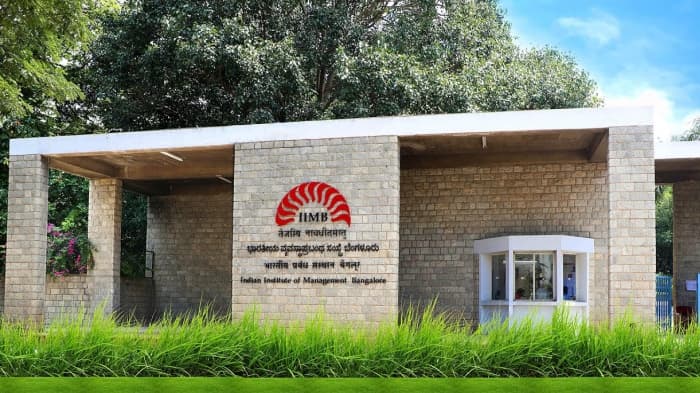
The Indian Institute of Management Bangalore (IIMB) stands as a premier management institution in Asia, recognized for its integration of academic research, enterprise incubation, and leadership development. Established in 1973 under the Mysore Societies' Registration Act, IIMB was chronologically the third first-generation Indian Institute of Management, completing the "ABC" triad alongside IIM Calcutta and IIM Ahmedabad. The establishment of the institute was recommended by a government committee headed by Ravi J. Matthai, the inaugural Director of IIM Ahmedabad, which highlighted the surging industrial demand for high-caliber management graduates. The Government of Karnataka facilitated its creation by donating 105 acres of land free of cost alongside a capital grant.
The institute was formally inaugurated on October 28, 1973, by Indira Gandhi, then Prime Minister of India, at the Ravindra Kalakshetra in Bangalore. Under its founding Board Chairperson, banker T.A. Pai, and its inaugural Director, N.S. Ramaswamy, IIMB was initially structured with a mandate to address the management and operational needs of Public Sector Enterprises (PSUs), government utilities, and public infrastructure projects. Operating initially from rented premises at St. Joseph’s College of Commerce on Langford Road, the institute launched management development programs for sector-specific public industries before introducing its flagship Post Graduate Programme (PGP) in 1974 and its Fellow Programme in Management (FPM) in 1976. The institution transitioned to its permanent 105-acre campus on Bannerghatta Road in 1983, a facility designed by architect B.V. Doshi, supplemented in recent years by a secondary 110-acre campus expansion.
Over five decades, IIMB's strategic mandate expanded from public enterprise governance to global corporate management, technology strategy, and entrepreneurial venture creation. Located in Bengaluru, India's technology and venture capital hub, the institute leverages its proximity to multinational corporations, global capability centers (GCCs), and technology startups to connect academic research with corporate practice.
The domestic and international standing of IIMB is validated across major institutional ranking frameworks. Nationally, the National Institutional Ranking Framework (NIRF) under the Ministry of Education ranks IIMB consistently at #2 in the Management category.
| Ranking Framework | Program / Subject Category | Domestic Position | International / Regional Rank |
|---|---|---|---|
| NIRF Management (2025) | Overall Management Education | #2 | — |
| IIRF Management (2025) | Government Management Institutions | #3 | — |
The institutional trajectory reflects a deliberate transformation: while its early decades established governance models for state-owned infrastructure, its current era focuses on digital business transformation, corporate leadership, and technology-driven enterprise development.
Program Portfolio and Executive MBA Architecture
IIM Bangalore offers academic programs tailored to different career stages, ranging from undergraduate degrees to doctoral research. The degree-granting portfolio comprises the two-year Post Graduate Programme in Management (PGP), the Post Graduate Programme in Business Analytics (PGPBA), the Post Graduate Programme in Public Policy and Management (PGPPM), the Doctor of Philosophy (PhD), and undergraduate degrees including the BBA in Digital Business and Entrepreneurship (DBE).
Within this broader portfolio, the Executive MBA offerings are divided into two primary formats to accommodate different professional requirements:
- Executive Post Graduate Programme in Management (EPGP): A one-year, full-time, intensive residential Master of Business Administration degree designed for experienced professionals seeking a career transition or acceleration into senior leadership.
- Post Graduate Programme in Enterprise Management (PGPEM): A two-year, weekend hybrid Master of Business Administration degree structured for working executives who wish to pursue advanced management education while continuing their full-time corporate roles.
| Program Attribute | EPGP (Executive MBA - Full-Time) | PGPEM (Executive MBA - Weekend) | PGP (Flagship MBA) |
|---|---|---|---|
| Target Candidate | Experienced Professionals (5–12+ yrs experience) | Working Managers & Senior Leads (6+ yrs experience) | Early-Career Graduates & Professionals (0–3 yrs) |
| Program Duration | 1 Year (4 Intensive Terms + Immersion) | 2 Years (8 Quarters, Weekend Schedule) | 2 Years (6 Academic Terms + Summer Internship) |
| Format & Delivery | Full-Time Residential | Weekend Hybrid (On-Campus / Online Blend) | Full-Time Residential |
| Degree Conferred | Master of Business Administration (MBA) | Master of Business Administration (MBA) | Master of Business Administration (MBA) |
| Primary Entry Exam | GMAT / GRE (Physical Center Only) | CAT / GMAT / GRE / IIMB Test | CAT (Domestic) / GMAT (International) |
The structural distinction between the EPGP and PGPEM addresses two distinct career development paths. The EPGP requires candidates to step out of the workforce for 12 months, creating an environment for immersive learning, cross-industry knowledge sharing, and structured lateral recruitment into strategic leadership roles. Conversely, the PGPEM uses an applied learning model where working executives directly apply theoretical concepts learned during weekend modules to organizational challenges in their current workplaces, serving as a platform for enterprise-sponsored leaders.
Specializations Offered
Rather than locking candidates into rigid specialization tracks, IIM Bangalore uses a flexible academic curriculum built around a core foundation followed by a custom elective selection process. Following required core courses in foundational management disciplines during the initial terms, executive students customize their learning focus via a course bidding system. The executive elective catalog offers over 100 specialized courses across academic areas.
Elective Streams and Subject Distributions
- Decision Sciences & Business Analytics: Analytics for Cross-Functional Excellence, Analytics for E-Commerce and Retail Operations, Business Analytics and Intelligence, Data Visualization and Storytelling, Generative AI Applications, Applied Natural Language Processing (NLP), Optimization, Sports Analytics, and Spreadsheet Modeling.
- Strategy & General Management: Business Strategy via Capstone Simulation, Digital Business Models and Strategy, Corporate Strategy, Platform Business Models, Strategy Consulting, Strategic Leadership, Technology and Innovation Strategy, and Managing Digital Transformations.
- Finance and Accounting: Advanced Value Investing, Corporate Financial Strategy, Financial Derivatives, Fixed Income Securities, Fintech and Financial Services Ecosystems, Mergers, Acquisitions & Corporate Restructuring, Venture Capital, Investment Banking, Valuation, and Real Estate Investment Management.
- Information Systems & Digital Product Management: Artificial Intelligence Applications for Managers, Big Data Analysis, Digital Product Management, Foundations of Machine Learning, Agile Project Management, Software Product Management, and Responsible AI.
- Entrepreneurship & Ecosystems: New Age Business Models, Lean Launch Lab, Venture Capital and Entrepreneurship, Entrepreneurial Marketing, and Social Entrepreneurship.
- Marketing Management: Omnichannel Retail Strategy, Brand Management, Business-to-Business (B2B) Marketing, Digital Marketing Strategies, Marketing Analytics, Strategic Pricing, and Consumer Behavior.
- Organizational Behavior & Human Resources: Enlightened Leadership, Inclusive Business Models, Leadership in the Digital Era, Managing Career Success and Transition, and Creating High-Performance Organizations.
- Economics & Public Policy: Behavioural Economics, Business, Finance & International Economy, Econometrics for Consultants, International Financial and Monetary Economics, Health Economics, and Business Government and Society.
Areas of Institutional Expertise
IIM Bangalore is recognized for its specialized academic focus across four main domain areas:
The first is Business Analytics, Data Science, and Applied Artificial Intelligence. Supported by research infrastructure such as the Data Centre & Analytics Lab (DCAL) and the Behavioural Sciences Lab, IIMB integrates machine learning, NLP, and predictive analytics into core business decision-making frameworks. This capability prepares executive graduates for roles in product leadership, digital transformation, and enterprise AI strategy.
The second domain is Entrepreneurship and Business Incubation. The Nadathur S. Raghavan Centre for Entrepreneurial Learning (NSRCEL) at IIMB is a leading academic incubator in India. NSRCEL provides executive students and alumni with seed funding access, enterprise mentorship, and incubation space, resulting in consistent venture creation across tech, social, and healthcare sectors.
The third field covers Private Equity, Venture Capital, and Corporate Finance. Supported by the Tony James Centre for Private Equity and Venture Capital, the institute maintains strong capability in deal structuring, corporate valuation, risk management, and financial technology innovation.
The fourth domain centers on Technology Strategy, Operations, and Infrastructure Governance. Leveraging its geographic location in Bengaluru alongside its historical foundation in public sector management, IIMB excels in operations research, global supply chain optimization, infrastructure financing, and public policy formulation.
Fee Structure and Program Duration
The financial outlay for executive education at IIM Bangalore reflects its positioning among global business schools. The institution provides transparent fee structures covering tuition, course materials, digital resources, campus services, accommodation, and global immersion components.
For the full-time Executive Post Graduate Programme (EPGP), program fees vary based on accommodation selections (single executive accommodation, off-campus/non-hostel arrangements, or family housing). The mandatory International Immersion module is integrated into the core program costs.
| Expense Component | EPGP (Single Accommodation) | EPGP (Without Accommodation) | EPGP (Family Accommodation) | PGPEM (Weekend MBA) |
|---|---|---|---|---|
| Program Duration | 1 Year (12 Months) | 1 Year (12 Months) | 1 Year (12 Months) | 2 Years (24 Months) |
| Tuition & Academic Fees | ₹26,50,000 | ₹26,50,000 | ₹26,50,000 | ₹20,11,000 |
| International Immersion | ₹5,50,000 | ₹5,50,000 | ₹5,50,000 | N/A / Optional |
| Hostel Accommodation Rent | ₹80,000 | N/A | ₹3,76,000 | N/A |
| Hostel Mess Charges | ₹63,000–₹66,000 | N/A | Variable | N/A |
| Caution Deposit (Refundable) | ₹25,000 | ₹20,000 | ₹20,000 | ₹10,000 |
| Total Official Cost | ₹33,68,000–₹33,71,000 | ₹32,20,000 | ₹36,62,000 | ₹20,21,000 |
Applicable taxes and government levies are payable at the time of admission as per prevailing regulations. Additional personal expenses, such as international travel visas, passport processing, and individual daily living expenses during the international immersion, are borne separately by the student.
Financial Aid and Scholarship Ecosystem
IIM Bangalore provides financial aid options and scholarship frameworks to support executive candidates:
- EPGP Merit Scholarships: Tuition waivers of up to ₹8,00,000 awarded to top-ranked candidates entering the program based on composite admission merit scores.
- EPGP Merit-cum-Means Scholarships: Grants of up to ₹6,00,000 designated for high-performing candidates demonstrating financial need.
- Performance-Based Academic Awards: Conferred at the end of Term II, offering grants of up to ₹4,00,000 to the top five academic performers in the cohort.
- Corporate Fellowships & External Grants: Includes merit awards such as the Aditya Birla Scholarship (₹1,75,000/year), OPJEMS Scholarship (₹1,50,000), NTPC Scholarship (₹48,000/year for SC/ST/PwD candidates), and full tuition waivers under central government schemes.
- Social Sector Employment Waiver: Offers a tuition refund of up to one-third of total fees for graduates who choose to work in registered non-profit organizations or social sector enterprises for at least three years post-graduation.
Placement Outcomes and Employability
The Career Development Services (CDS) office manages a structured lateral placement process for Executive MBA (EPGP) graduates. Unlike entry-level post-graduate recruitment, EPGP hiring focuses on senior management roles, product leadership, strategy consulting engagements, and P&L ownership positions. The process uses a rolling placement format alongside a dedicated "Day Zero" recruitment drive.
EPGP Compensation Metrics and Batch Performance
| Metric Parameter | Class of 2024 Placement Cycle | Class of 2025 Placement Cycle | Multi-Year Trend Analysis |
|---|---|---|---|
| Total Batch Size | 75 Students | 82 Students | Steady cohort growth |
| Participating Candidates | 73 Students | 79 Students (3 Opted Out) | High active job-seeking rate |
| Accepted Placement Offers | 70 Offers | 72 Offers | Strong placement conversion |
| Overall Placement Rate | ~93.3% | ~91.1% | Maintained above 90% |
| Mean Salary (LPA) | ₹34.33 LPA | ₹35.50 LPA | Upward growth trajectory |
| Median Salary (LPA) | ₹33.00 LPA | ₹33.10 LPA | Strong baseline stability |
| Highest Compensation Package | Undisclosed Domestic | ₹1.25 Crore (International Strategy) | Premium executive positioning |
Industry Sector Distribution of Offers
Recruitment outcomes demonstrate strong demand across consulting, software tech products, and digital business transformation.
| Recruiting Industry Domain | Share of Accepted Offers | Common Functional Roles & Job Titles |
|---|---|---|
| Management & Tech Consulting | 44% | Engagement Manager, Strategy Consultant, Digital Lead |
| IT Services, Software & Products | 31% | Senior Product Manager, Director of Tech, AI Advisor |
| BFSI & FinTech Services | 9% | VP Global Markets, Fintech Strategy Lead, Risk Lead |
| Computers, Electronics & Manufacturing | 7% | Operations Director, Supply Chain Strategy Lead |
| Automobile & Mobility Enterprise | 4% | Corporate Strategy Manager, Product Owner |
| Infrastructure, Energy & Core | 4% | General Manager - Strategy, Infrastructure Project Lead |
| Niche Sectors (Aerospace, Retail, Public) | ~1% each | Omnichannel Strategy Manager, Program Lead |
Top recruiting firms hiring from the EPGP batch include strategy consulting firms such as Accenture Strategy (historically one of the largest employers), Bain & Company, Boston Consulting Group (BCG), McKinsey & Company, EY-Parthenon, Kearney, Alvarez & Marsal, and Takshashila Consulting. Key technology and product recruiters include Amazon, Google, Microsoft, Samsung Electronics, Amadeus, CGI, Persistent Systems, Genpact, Zomato, and Infosys Consulting. BFSI and industrial recruiters include Goldman Sachs, American Express, Kotak Mahindra Bank, Wells Fargo, Pine Labs, Aditya Birla Group, Tata Administrative Services (TAS), Reliance, RPG Group, and TVS Motors.
The lateral placement process serves to re-index candidate compensation and functional responsibility. Incoming executives, who often possess domain-specific engineering, technical project management, or operational backgrounds, transition into multi-functional management, corporate strategy, and P&L leadership roles.
Faculty Profile and Research Leadership
The instructional faculty body at IIM Bangalore comprises over 100 to 150 full-time academic members across management disciplines. 100% of the core faculty hold doctoral degrees (PhDs) earned from global research universities and national institutions.
Faculty members engage in research published across international academic journals. Recent research contributions by IIMB faculty include:
- Research in Oxford Economic Papers examining the cost of anonymity and pricing models within advertising-financed two-sided markets.
- Studies in the Journal of Business Finance & Accounting analyzing corporate divestitures and synergy gains using options market data.
- Applied research in the Journal of Sports Analytics utilizing Bayesian methodologies to evaluate performance dynamics under pressure.
The institute edits and publishes the IIMB Management Review (IMR), an academic journal focusing on management practice, economic policy, and corporate strategy in emerging markets.
Alumni Network and Enterprise Impact
The alumni network of IIM Bangalore includes over 25,000 management professionals working across global corporations, public governance, academic institutions, and entrepreneurial ventures.
Distinguished alumni include senior leaders in public service, such as Hasmukh Adhia (IAS, former Finance Secretary and Revenue Secretary to the Government of India), alongside numerous C-suite executives leading multinational corporations, partner-level management consultants, and startup founders supported by NSRCEL.
The alumni network actively supports institutional development and student growth. Through the "Shadow the CEO" initiative, current EPGP executive students accompany senior alumni executives for full operational days to observe executive decision-making firsthand. Alumni also participate in curriculum review panels, ensuring course content aligns with industry developments in enterprise AI, supply chain design, and digital business strategy.
Mode of Teaching and Pedagogical Framework
IIM Bangalore uses a multi-modal, participant-centered instructional framework that combines academic theory with practical application. Learning delivery includes the Harvard-style case method, real-time business simulations, capstone enterprise projects, and interactive lectures.
The curriculum incorporates capstone simulations where executive teams run virtual companies, adjusting operations, pricing, and marketing strategies in competitive markets. As the sole Indian member of the Global Network for Advanced Management (GNAM)—a consortium of 32 top business schools including Yale SOM, INSEAD, and Oxford Saïd—IIMB offers executive students access to international network weeks and cross-institutional virtual courses.
A key highlight of the full-time EPGP curriculum is the mandatory two-week International Immersion module completed during Term III. Designed to build cross-cultural leadership skills and an understanding of international trade, the executive cohort visits global partner institutions:
- ESCP Business School (Berlin & Madrid Campuses): Focuses on European macroeconomic policy, industrial VR technology applications (such as site visits to Alstom rail facilities), tech entrepreneurship in sustainability, and the German Mittelstand corporate model.
- Solvay Brussels School of Economics and Management (SBS-EM, Belgium): Focuses on "Doing Business in the European Union," intellectual property (IP) valuation, European patent frameworks, and management accounting for innovation.
- WHU–Otto Beisheim School of Management (Germany): Explores European supply chain networks, industrial automation, and operational strategy.
- Nova School of Business and Economics (Nova SBE, Lisbon, Portugal): Covers artificial intelligence applications, organizational memory, leadership strategy, and sustainable venture ecosystems.
Eligibility and Admission Requirements
Admissions to IIM Bangalore's executive programs are competitive, utilizing a multi-factor evaluation framework that assesses academic records, professional achievements, test scores, and leadership potential.
Eligibility Criteria Breakdown
| Parameter | EPGP Requirements (Full-Time Executive MBA) | PGPEM Requirements (Weekend Executive MBA) |
|---|---|---|
| Educational Background | Bachelor’s degree with minimum 50% marks or equivalent CGPA (45% for SC/ST/PwD) | Bachelor’s degree with minimum 50% marks or equivalent CGPA (45% for SC/ST/PwD) |
| Professional Qualifications | CA / ICWA / CS accepted in lieu of Bachelor's degree (same cutoff) | CA / ICWA / CS accepted in lieu of Bachelor's degree (same cutoff) |
| Work Experience Minimum | Minimum 5 Years full-time post-graduation experience (as of March 31) | Minimum 6 Years full-time post-graduation experience (as of March 31) |
| Preferred Experience Range | 5 to 12 Years (Cohort Average: ~7 Years) | 6 to 15+ Years (Mid-to-Senior Working Managers) |
| Accepted Entrance Tests | Valid GMAT or GRE score | CAT, GMAT, GRE, or internal IIMB Test |
| Test Center Mandate | Physical Test Center scores ONLY (Online/Home tests rejected) | Physical Test Center scores ONLY (Online/Home tests rejected) |
| Institutional Test Codes | GMAT: Q9H-KK-84 | GRE: 1675 | GMAT: Q9HKK-32 | GRE: 1681 |
Selection Stages and Evaluation Mechanics
The admissions selection framework follows a structured two-stage model:
- Stage I: Application Dossier Evaluation: Candidates complete an online application submitting academic transcripts, standardized test scores, employment verification documents, a Statement of Purpose (SOP) outlining career achievements and post-MBA goals, and two mandatory professional letters of reference (preferably including one from a current employer or direct supervisor).
- Stage II: Personal Interview & Written Ability Test (WAT): Shortlisted candidates undergo a Written Ability Test to assess critical thinking and written communication, followed by an interview before an academic and industry panel. The panel evaluates candidates on work experience quality, leadership potential, diversity, and executive presence. Offers are extended based on a composite score relative to seat availability.
EPGP Cohort Profile Demographics
The admitted EPGP cohort reflects a diverse group of mid-career professionals:
- Class Size: 73 to 82 students.
- Work Experience: Average of 7 years full-time experience (ranging from 5 to 13 years). 47% of the cohort possesses 5–8 years of experience, while 53% brings 8–13 years.
- International Experience: Approximately 26% of candidates bring prior international work experience.
- Standardized Scores: Average GMAT score of 698 (ranging from 640 to 760).
- Professional Certifications: A significant portion of the cohort holds professional designations, including CFA, CA, PMP, Six Sigma, and Lean Management credentials.
- Prior Industry Backgrounds: Prior functional roles include Product Managers, Engineering Managers, Assistant Vice Presidents, Operations Leads, Strategy Consultants, and Software Architects across technology, banking, manufacturing, healthcare, and public sector domains.
IIM Bangalore’s Executive MBA architecture provides an established management education platform for mid-career professionals. By combining rigorous academic coursework with specialized analytics instruction, international immersion experiences, and lateral placement support, IIMB enables experienced specialists to transition into strategic business leadership.
The program offers clear career acceleration, allowing executives from technical and functional backgrounds to move into general management, product leadership, and strategy consulting roles. With an average placement package of ₹35.50 LPA against a program cost of ~₹33.68 Lakhs, the 1-year full-time EPGP provides a strong return on investment. Located in Bengaluru, IIMB offers direct access to technology firms, corporate headquarters, and venture capital networks. Additionally, the inclusion of a mandatory European immersion and membership in the GNAM consortium ensures that graduates gain a broad global perspective alongside their core management education.