
To further advance academic excellence, IIRF has expanded its reach through diverse initiatives, including ICOSA for school accreditation, study abroad programs, and specialized online courses.
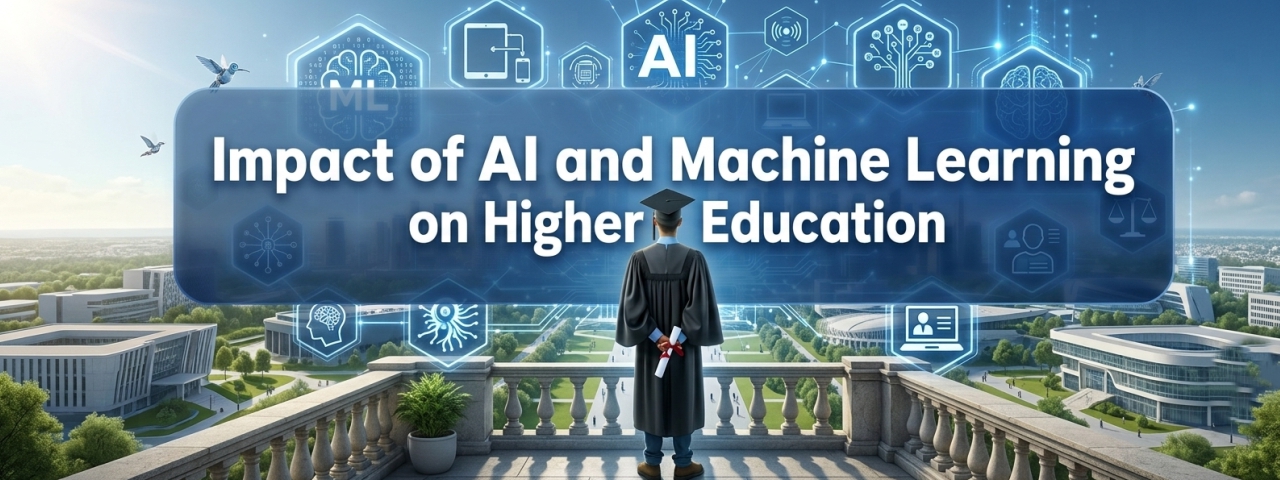
The Growing Role of AI in Modern Higher Education
The use of Artificial Intelligence in education is changing the way universities teach students to check their work and talk to them. Schools around the world are using Artificial Intelligence in education more and more to make things easier, make sure everyone can get to it and make learning better. Artificial Intelligence in education is used for everything from when students apply to when they take tests. It is not something that schools are trying out, it is something that they really need now.
By using numbers and information to help machines learn, schools are making their systems smarter. This helps make learning more personal for each student with Artificial Intelligence. It helps students learn in a way that's right for them and it makes the results for students better with Artificial Intelligence in education. Higher education is dealing with a lot of students and people who learn in different ways. At this time everything is going digital. This is where artificial intelligence in education comes in. Artificial intelligence in education is a good solution because it helps schools try new things and still meet their academic goals. Henceforth, Artificial intelligence in education is very helpful.
Understanding Artificial Intelligence and Machine Learning in Education
The main thing that makes this transformation happen is machine learning in learning. This lets systems look at how students behave, how they do in school and what they like to learn. Machine learning is different from school software because it gets better and better as it looks at lots of data about education. When you put machine learning in learning with artificial intelligence in education, schools can tell if a student is going to have trouble suggesting things that might help and teach in a way that is just right for each student. Machine learning makes sure that students get lessons that're just right for them at a pace that is good for them and that they can really understand. AI teaching tools like tutoring systems and automated assessment platforms use machine learning a lot in learning. These systems make it possible for courses to change and get better in time.This is what we call learning.
How AI Is Transforming Teaching Methods in Universities
AI teaching tools make adaptive learning possible which helps improve student outcomes with AI in subjects. AI is used in these AI teaching tools to make learning for students.
Here are some ways Artificial Intelligence is changing universities:
Artificial Intelligence's helping students who need extra help.
Artificial Intelligence is making it possible for teachers to give students personalized attention.
Artificial Intelligence is changing the way teachers grade papers and tests.
The way teachers teach at universities is changing a lot because of intelligence in education. This is happening because teachers are using artificial intelligence tools to teach. Teachers use these tools to grade papers automatically, keeping track of how students are doing and make lessons more fun and interactive. These tools help students learn better by making lessons easier or harder based on how well students do. This way students really understand what they are learning. Artificial intelligence also helps teachers give each student the help they need without having to do a lot of work. University teaching methods are getting better because of intelligence, in education especially with the new artificial intelligence tools that teachers are using. Through AI in education, lectures are supplemented with virtual assistants, predictive analytics, and smart content delivery. Machine learning in learning plays a crucial role in refining these methods by continuously analyzing engagement data. As a result, universities report improved retention, higher engagement, and better student outcomes with AI. By integrating adaptive learning, AI teaching tools, and personalized learning technology, higher education institutions are creating more inclusive and effective learning environments where AI in education enhances—not replaces—human instruction.
Adaptive Learning Systems and Smarter Course Design
Adaptive learning systems are really making a difference in education because of Artificial Intelligence. This means that colleges and universities can stop using the old curriculum for every student. Adaptive learning systems use computer programs to look at how students are doing what they get on tests and how interested they are in the material. Then they change the way of what the students are learning.
This way students who are having trouble with some things can get help. Students who are doing well can move ahead faster without having to repeat things they already know about by adaptive learning systems and how they work with adaptive learning systems. When we use machine learning, these adaptive systems get better and better at suggesting things. This means they can make course design more responsive and efficient. Machine learning really helps the adaptive systems make recommendations. The adaptive systems and machine learning work together to make learning.
Universities are using technology to make learning more personal. They want to create courses that're a good fit for each student. When teachers use tools with artificial intelligence they can make their classes better based on how students are actually doing. This way teachers do not have to guess what students need. This approach is really helping students. Fewer students are dropping out of school. Students are also understanding and remembering things better. When artificial intelligence is used students do a lot better. The students feel like they have help and are more interested in their school work. Universities are using intelligence to make learning better for students. Artificial intelligence is helping to make students feel more supported and engaged in their school work. Overall, adaptive learning-driven course design represents a shift toward flexibility, inclusivity, and measurable academic growth within AI in education ecosystems.

Improving Student Engagement and Academic Performance with AI
Improving engagement and academic performance is a deal for Artificial Intelligence in education. This is especially true in university classrooms with lots of different students. Artificial Intelligence can help schools by using machine learning to look at how students are doing. It can find patterns in things like how students come to class, how they do on tests and if they are participating in class.This helps schools figure out which students might be getting disengaged. Then the school can step in. Help those students with extra academic support or counseling. Sometimes the school might even change the way a class is taught. All of this helps students do better in school because Artificial Intelligence is helping schools stop problems before they get too bad. Artificial Intelligence is really good at helping schools improve student outcomes by using data to make decisions.
Personalized learning technology is really important for keeping students motivated. It does this by making sure the things they learn are interesting to them and that they can learn at their pace. They can also learn at their skill level. There are platforms that use artificial intelligence to help teach students. These platforms use things like quizzes and simulations to make learning fun. They also give students feedback that is tailored to their needs. When students use these platforms they get a learning experience that's just right for them. They are challenged. They do not get too frustrated. Personalized learning and Adaptive learning work well together. Over time students who use these systems start to feel more confident. They participate more in class. They do better in school. Personalized learning technology helps students achieve success. As universities continue integrating AI in education, the focus increasingly shifts from passive instruction to meaningful engagement, ultimately enhancing learning quality and long-term student outcomes with AI.
How AI Supports Better Student Outcomes
1. Data-Driven Academic Support
One of the things about Artificial Intelligence in education is that it can look at a lot of academic information. Universities use machine learning to see who is coming to class and how students are doing. If they are really paying attention. They want to find students who might need some help. Artificial Intelligence helps universities do this by looking at the information and finding problems before they get too big. This means universities can help students before things get out of hand and that makes a difference in how well students do, with Artificial Intelligence.
2. Personalized Learning Pathways
When we use technology that is made for each student the computer systems can create a special plan for learning. This plan is made for each student. It is based on what they are good at and what they need to work on. The computer systems use a way of teaching that changes how hard the work is and how fast the student has to go. This helps the students really understand what they are learning and do well in school for a time. The technology that is made just for each student is very helpful for students because it creates a plan for learning that is just, for them.
3. Real-Time Feedback and Assessment
Modern AI teaching tools give students feedback away on their quizzes, assignments and participation. This helps students with the Modern AI teaching tools to fix their mistakes. The Modern AI teaching tools use machine learning to help students learn. When students get feedback from the Modern AI teaching tools they can understand the concepts better. Feel more confident. The Modern AI teaching tools are really good at helping students do well in school.
Challenges, Technical Constraints, and Limitations of AI in Higher Education
AI in education is a thing but it has some problems that schools need to think about carefully. The cost of setting up AI is very high. A lot of schools do not have the right computers and technology to make it work. Also teachers often do not know how to use AI tools because they have not been trained. AI in education relies on information so if the information is not accurate or is missing it can cause bad decisions to be made. People are also worried about how student information's used and this is a big concern for AI in education. AI, in education, needs to be used in a way that's fair and respects students' privacy. Adaptive learning and personalized learning technology are really helpful because they are flexible. However if we rely much on automation we might not have as much human interaction. Adaptive learning and personalized learning technology are important. Human interaction is still really important for thinking critically and for students to get good guidance from teachers. This is a problem with learning and personalized learning technology and it reminds teachers that how well students do with artificial intelligence or AI for short does not just depend on the technology itself but also, on how well teachers use adaptive learning and personalized learning technology in the classroom.
The Future of Higher Education in an AI-Driven Learning Environment
The future of college is going to be different because of intelligence. Artificial intelligence will be used more in education for teaching, administration and grading. Schools will make computer programs that change to help students learn. Artificial intelligence in education will help schools plan what students need to learn.
Schools will also use technology to help students learn in their way. This kind of learning will not be special, it will be normal. New artificial intelligence tools for teaching will help classes that're in person and online at the same time. Artificial intelligence will also help students work together from countries and keep learning their whole lives. Artificial intelligence in education is really going to change things. Institutions that do well will be the ones that bring ideas and fairness together. They make sure that students who use Artificial Intelligence do better. They also make sure that everyone is treated equally and that the school work is honest. Institutions like these will be the ones that really succeed with Artificial Intelligence.
Conclusion : Balancing Technology and Human Diligence in Education
Artificial intelligence is really changing the way people learn in college.. It is not going to take the place of what people can do. Artificial intelligence in education is not a replacement for what people can do. The best way to teach is to use intelligence teaching tools and have teachers who really care about their students. This way students learn more. Get better results, with artificial intelligence. When we use technology in a way it helps teachers do their job better and that means students do better with artificial intelligence. For students who want to explore AI fundamentals, prompt learning, and responsible AI use in education, platforms like https://www.coursera.org/learn/ai-for-everyone offer accessible and credible learning opportunities that bridge technology and academic growth.