August 19th, 2026
Every morning a lot of people wake up and turn on the lights, charge their phones, go to work or attend college. They do not think about where the energy to do all these things comes from. At the time someone is installing solar panels on a rooftop someone else is taking care of a wind turbine and researchers are working on ways to produce electricity that is cleaner. These things may seem different. They are all connected by one thing. The need for a better and more sustainable energy future. As the world moves towards using energy in a way one thing is becoming clear: we need people who know what they are doing and have the right skills to make this happen. This is why sustainable energy education is important not for engineers but also for students, teachers, industries, governments and everyone.
The demand for people who know how to work with energy is growing because countries are investing more in it. The number of people who can do this work is not growing as fast. In 2024 the renewable energy sector supported a record 16.6 million jobs worldwide. There are still big gaps in some areas and not enough women are working in these jobs (source: International Labour Organization). Also more people have access to electricity now than before. It increased from 87% in 2015 to 92% in 2023. Progress is slowing down and not many people are using renewable energy for transport and heating (source: UN SDG 7 Progress Report). These things show that the world is moving towards using energy in a way but we will not be successful in the long run if we do not have enough people with the right skills.
This is where sustainable energy education can really make a difference. Universities and colleges can do a lot more than just give degrees. They can help students learn by doing work working on real projects doing research and meeting people from the industry. This way what students learn is useful not in the classroom but also in real life. Sustainable energy education helps students understand how the energy we use affects the environment, the economy and our daily lives. It gives them the confidence and skills they need to be a part of the energy transition no matter what field they choose.
This article talks about how universities and colleges can help create a workforce that can handle the energy transition. It discusses how universities can encourage sustainability and why it is important to learn from real-life experiences and from people in the industry what skills are needed for jobs in energy and the opportunities that are growing in the green economy. It also talks about why it's important to work with industries and policymakers. All these things show that sustainable energy education is not about learning new things. It is about preparing people to create a cleaner and more sustainable future.
The global energy transition is changing how the world makes and uses energy. Countries are moving away from fuels and investing in things like solar, wind and hydropower to reduce bad emissions and build a better future. This is not about technology, it is also about people. To reach this goal we need more people who know how to design, install and take care of clean energy systems. This is why education about energy and renewable energy is very important because it helps prepare people to make these plans real.
The clean energy industry is already making new jobs very quickly. In 2022 there were 13.7 million energy jobs and in 2023 there were 16.2 million, which is a big increase of about 18% in one year, the biggest increase we have seen so far according to the International Renewable Energy Agency. Things changed in 2024. Even though we installed a lot of renewable energy, the number of jobs only grew by 2.3%, which means we had 16.6 million jobs in total, says the International Labour Organization. This shows that just making energy projects bigger does not automatically make enough skilled workers. Many employers are having trouble finding people with the technical knowledge and hands-on experience, which is making a big gap in skills.
The challenge is not just to make clean energy but also to get people ready for the jobs that come with it. The United Nations wants us to improve energy efficiency and use renewable energy by 2030 as part of their Sustainable Development Goal 7. To achieve these goals we need a workforce that's ready for new technologies and changing industry needs. The International Labour Organization says that investing in education skills development and training is necessary. They also say that helping workers from fossil fuel industries get skills so they can move to clean energy careers. This is where education about energy becomes a bridge, between our big climate goals and the skilled workforce that we need to make into a successful global energy transition.
The shift towards clean energy is changing what industries need. As new technologies grow, just knowing about climate change isn't enough. People need to understand how energy works and how it's used. Sustainable energy education helps here. It lets learners understand the energy system. Sustainable energy education brings together areas of study. This helps learners solve problems and help create a cleaner future.
Clean energy education is different from environmental education. Environmental education mainly teaches about protecting the environment. Clean energy education teaches the skills needed to work with energy. It introduces learners to things like power, wind power and energy storage. It also covers energy policy, environmental law and business management.
Sustainable energy education is really good because it does not just focus on one thing. It brings together different fields that are all connected to clean energy. Students learn about things like energy, wind energy, hydropower and bioenergy. They also learn about energy efficiency, smart grids, energy storage and climate science.. They study how energy projects are planned, funded and managed. This includes learning about policy, environmental laws, business, economics and sustainability analytics. All these different subjects help learners understand the energy sector as a whole. It also gets them ready for career paths. So renewable energy education helps learners develop knowledge and a wider understanding of the industry.
People can get into the energy sector in different ways depending on the career they want. Some people choose programmes because they offer hands-on training. This prepares learners for jobs like installing solar panels or working with electrical equipment. Others prefer university programmes, where they learn more than practical skills. They learn about research, innovation, teamwork and critical thinking. These programmes help students understand the picture and solve real problems. Both types of education are important because the clean energy sector needs technicians and professionals. Professionals can lead projects, do research and make decisions.
The global energy transition is a problem that needs many different people to solve. We need to build an energy future and this requires people with different skills working together. Engineers design energy systems and economists study costs and investments. Policymakers develop regulations and business professionals turn ideas into projects. When all these different areas of expertise work together it is easier to find solutions that really work. This is why sustainable energy education encourages people to work across different disciplines. It does not teach them separately. As a result, renewable energy education prepares learners for different careers, including solar technicians, grid engineers, energy policy analysts, sustainability consultants and ESG managers. It also helps them understand how their work contributes to a sustainable future, which is what sustainable energy education is all about and that is renewable energy education.
The move to clean energy is creating a lot of job opportunities. It is getting harder to find people with the right skills. Every year renewable energy projects are being planned and completed around the world. Building parks and wind farms and other clean energy systems takes more than just money and technology. It also needs a clean energy workforce that can design and install and operate and improve these systems. This is why the global energy transition is not about changing energy sources. It is also about preparing people for the jobs that come with this change. Expanding energy education and renewable energy education is one of the best ways to meet this need.
There are job opportunities in clean energy. The number of jobs is growing at rates across renewable energy technologies. Today the solar photovoltaic sector has jobs. It provides around 7.3 million jobs worldwide ( source: IRENA Report) . The liquid biofuels sector has 2.6 million jobs. The hydropower sector has 2.3 million jobs. The wind energy sector has 1.9 million jobs. These numbers show that the demand for a clean energy workforce is especially high in solar energy. Every renewable energy technology needs trained professionals. Through energy education people can learn the practical and technical skills needed to work in these growing sectors.
If we look at parts of the world we can see where the workforce gap exists. The clean energy workforce gap exists in places. China has around 7.3 million energy jobs. This is 44% of the global total. The European Union has about 1.8 million jobs. India and the United States each have around 1 to 1.3 million jobs.. Africa has only 324,000 renewable energy jobs. This is even though Africa has some of the world's solar and wind resources. This shows that natural resources alone do not create jobs. They must be supported by education and practical training and opportunities to build skills. Strengthening energy education can help more people join the clean energy workforce. It can also help countries take part effectively in the global energy transition.
The clean energy workforce gap is also a problem when it comes to gender. Women make up 32% of the global renewable energy workforce. This means a large share of talent is still missing from the sector. Making energy education and sustainable energy education more accessible can encourage more women to join the clean energy workforce. It can also encourage underrepresented groups to join. A skilled and diverse and inclusive clean energy workforce will make the renewable energy sector stronger. It will also make the global energy transition more balanced and sustainable, for the future. The clean energy workforce is also very important. The global energy transition needs a clean energy workforce. This is why we need to focus on energy, education and training. We need to make sure that people have the skills they need to work in the energy sector.
The energy sector is changing really fast and universities need to change with it. Students these days need more than book knowledge. They need skills that they can actually use in real workplaces. This is why sustainable energy courses are becoming a part of higher education. These sustainable energy courses help students understand how clean energy works, how different energy systems are connected and how they can contribute to the energy transition. They also make energy education better by preparing students for different roles in the growing clean energy industry, which is all about sustainable energy.
A sustainable energy course should help students build a strong foundation in technical skills. Some of the areas include:
Students should also get to work on laboratory activities, go on field visits and work on industry projects in addition to classroom learning. These experiences help them understand how the knowledge they gain can be used in situations and prepare them for technical roles through renewable energy education, which focuses on sustainable energy.
Building an energy future is not just the job of engineers. Every successful energy project also needs planning, proper funding and supportive policies. So universities should teach topics such as:
These subjects help students understand how clean energy projects go from ideas to reality. They also make energy courses valuable for students from business, economics, law, public policy and management backgrounds making renewable energy education more inclusive and focused on sustainable energy.
As new technologies keep developing, universities should update their programmes regularly. New fields such as the hydrogen economy, energy informatics, electric vehicle infrastructure and advanced smart grids are creating career opportunities in sustainable energy. Many institutions are also offering degrees that combine subjects and allow students to develop a wider range of skills in sustainable energy.
These days people do not have to depend on full-time university programmes to learn about clean energy and sustainable energy courses. Many institutions now offer classes, hybrid courses, micro-credentials and certificate programmes that you can build on. These flexible learning options make renewable energy education easier for working professionals, recent graduates and learners, from parts of the world. By offering ways to learn, universities can expand sustainable energy education and help build the skilled workforce needed to support the global energy transition and sustainable energy.
The move to clean energy is creating new job opportunities. It is also changing what employers look for in job seekers. Today just knowing things from a classroom is not enough. Companies want people who understand technologies, work well with others and solve real problems. This is why education in energy and renewable energy is becoming more important. It helps build a clean energy workforce that meets the changing needs of the global energy transition.
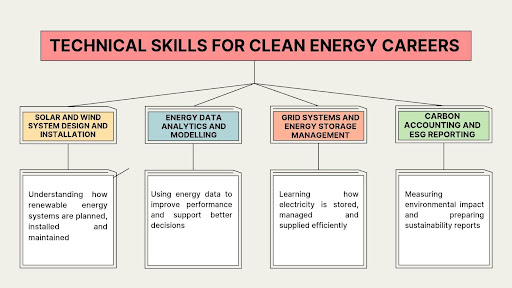
Some of the most important technical skills include:
Along with technical knowledge, employers also look for skills that help people work well with others.
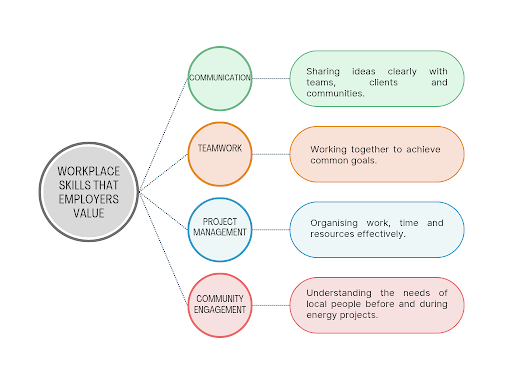
Many jobs today need both non-technical knowledge. For example an engineer may need to understand government policies. Someone working in policy should know the basics of energy technologies. This combination of skills helps professionals make decisions and work more effectively with different teams. Sustainable energy education encourages this kind of learning by bringing subjects together.
Another challenge is helping workers from fossil fuel industries prepare for opportunities. The International Labour Organization (ILO) says education, training and lifelong learning are essential for developing job skills. IRENA points out that there is information about the skills needed for many renewable energy jobs. This makes it harder for universities to design courses that match industry needs. Universities and industries should work closely together. Stronger partnerships can improve energy education, strengthen the clean energy workforce and better support the global energy transition.
Higher Education Sustainability is really important these days. It is changing the way universities teach students. Universities are not just giving lectures in classrooms anymore. They are changing the way they teach, doing research and giving students chances to learn from life experiences. This is making Higher Education Sustainability a part of university education. Universities are teaching students about energy and renewable energy. They want students to understand the technologies and the problems that come with them like economic and environmental issues.
Universities and industries are working together more now. They are working with energy companies, government organisations and research centres to give students hands-on learning. Students get to see how the things they learn in class work in life. They do internships, workshops and projects. Listen to guest lectures. This helps universities understand what employers want so they can teach students the things they need to know to work in the energy field.
The university campus is now a place where students can learn about sustainability. They have panels, energy-efficient buildings and rainwater harvesting systems. These are not just things on campus, they are places where students can learn. Students can see how these things work and collect data. Some universities are even trying to be carbon neutral. This shows students how they can work together to achieve long-term sustainability goals. Students learn by doing things, not just reading about them.
Universities are also doing research to help find energy solutions. They are working on things like energy, battery storage and hydrogen energy. This research helps students think creatively and come up with solutions. They get to work on energy problems and help find answers. This is a way for students to learn about renewable energy.
Universities are working together around the world. They are sharing ideas, doing research together and learning from each other. This is especially helpful when universities from countries work together. They can share knowledge, teach each other new things and create more learning opportunities. Universities are helping to make sure that countries have energy policies and sustainability plans. Higher Education Sustainability, sustainable energy education and renewable energy education are all important for making sure that future professionals are ready to help with the energy transition. Universities are doing a job of teaching students about Higher Education Sustainability and helping them get ready for the future.
The world is changing the way it uses energy. This is creating a lot of new jobs. Now students have a lot of choices for what they want to do when they finish school. You do not have to be an engineer to work in Green Energy. People who study science, business, environmental studies, finance and public policy are also working in Green Energy. This is where Green Energy education and Sustainable Development education come in. These programmes teach students what they need to know to work in Green Energy. They learn about Sustainable Development and Renewable Energy and they get to practice what they learn. This is very important in countries like India, where a lot of people are needed to work in Green Energy. In India the demand for Green Energy professionals is going up fast but some schools are still working on creating special programmes to teach students about Green Energy Careers. Green Energy Careers are becoming important and Sustainable Development education is helping students get ready for these jobs.
| Degree / Course | Career Opportunity in the Clean Energy Sector | Top Universities Offering the Course |
| B.Tech / B.Sc. in Renewable Energy Engineering | Solar or Wind Systems Engineer | TERI School of Advanced Studies (India), Technical University of Denmark (DTU), Delft University of Technology (Netherlands) |
| M.Sc. in Energy Policy | Energy Transition Policy Analyst | University of Sussex (UK), Arizona State University (USA), TERI School of Advanced Studies (India) |
| MBA in Sustainable Business | ESG Manager or Climate Finance Analyst | University of Exeter (UK), Griffith University (Australia), Indian Institute of Management (IIM) Lucknow |
| B.Sc. in Environmental Science | Carbon Accounting Specialist | University of Delhi (India), University of California, Berkeley (USA), University of British Columbia (Canada) |
| B.Tech in Electrical Engineering (Energy Specialisation) | Grid Integration Engineer | IIT Bombay, IIT Madras, NIT Trichy |
| Diploma in Solar Technology | Solar Installation Technician | National Institute of Solar Energy (NISE), Skill Council for Green Jobs (India), Gujarat Energy Research and Management Institute (GERMI) |
Higher education can really help with SDG 7 by teaching people about energy. We need reliable energy to do pretty much everything. It is important for studying, working, getting healthcare and running businesses. Lots of communities still do not have energy like others do. This is a reason why we have SDG 7 which wants to make sure everyone can get affordable and clean energy. To reach this goal we need technology and people who know how to use it. Universities can help by teaching energy and renewable energy. This way universities can help make a workforce that knows about clean energy. The clean energy workforce can help make sure more people get energy solutions. Higher education and SDG 7 and sustainable energy education are all connected. By working towards higher education, SDG 7 can make a big difference in people's lives through sustainable energy education and clean energy.
The difference between developed and developing countries shows that achieving SDG 7 is still a work in progress. In the year 2023 the money that countries gave to help clean energy projects in developing countries was US$21.6 billion. This was 27 percent more than the money they gave in 2022..Even with this increase it was still less than the US$28.4 billion they gave in 2016. This shows that the help available is still not enough for the growing demand for energy (source: International Labour Organization ).
There is also a difference in the amount of renewable energy that developed and developing countries have. Developed countries have a lot of energy, about 1,162 watts per person. Developing countries have much less, only about 341 watts per person. You can also find this information on the International Labour Organization website at www.ilo.org. These numbers show that the problem is not about building more renewable energy projects. It is also about making sure that every country has people who can plan, manage and improve these projects.
The International Labour Organization or ILO calls this a transition. This means that when we switch to clean energy it should help everyone, not a few people. Universities can help with this by teaching students the skills they need to work in the energy sector. They can also do research work with companies and give students hands-on experience. When more people learn about energy and renewable energy countries can build a stronger clean energy workforce. This helps the world transition to clean energy and move closer to the goals of SDG 7.
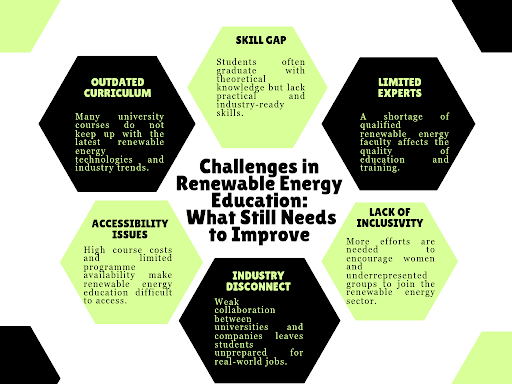
Modernise University Curriculam- Universities must update their clean energy education programmes regularly. This way students learn about clean energy technologies and industry practices. They will have the skills needed in today's energy sector.
The move to clean energy is not about replacing one energy source with another. It is also about getting people ready to make this change happen. The International Renewable Energy Agency, the United Nations and the International Labour Organization all say that we need to prepare people for the energy sector. We need to invest in energy education so that we can build a strong global energy transition.
The global energy transition will only succeed when countries invest in people as well as clean energy technologies. Universities, industries and governments all need to work to make learning more practical and connected to real workforce needs. By making energy education better, encouraging people to learn throughout their lives and creating opportunities for everyone to develop new skills we can build a stronger workforce and support long-term progress towards a cleaner future. The choices we make today about education will help decide how successful the global energy transition will be, for years to come.
1. What is sustainable energy education?
Sustainable energy education is like learning about how energy works and how we can use it in our daily lives. It teaches us about wind energy saving energy, new technologies and the policies that help them. The main goal of energy education is to prepare people to solve future energy problems in practical ways.
2. What kinds of energy courses can students study?
There are sustainable energy courses that students can choose from depending on what they are interested in. Some courses focus on engineering and renewable technologies while others teach us about energy policy, business, finance, sustainability and environmental planning. Many universities also offer certificates and short courses.
3. What skills are companies looking for during the energy transition?
As the global energy transition is growing companies want people who can do more than just understand technology. They also want people who can solve problems, work in teams, communicate well, have skills and be able to adapt to new ideas. Having a mix of practical skills is becoming more and more valuable every year.
4. Which green energy careers have opportunities today?
The clean energy sector has career options. Students can work as engineers or wind engineers, energy analysts, ESG managers, carbon accounting specialists, policy experts, grid engineers or solar installation technicians. New jobs are also being created as the clean energy sector continues to grow.
5. Why is renewable energy education connected to SDG 7?
SDG 7 is about making affordable energy available to everyone. Renewable energy education helps achieve this goal by preparing people who can design, manage and improve energy systems. Without professionals it will be much harder to reach this goal.
6. What does the ILO do to support the clean energy workforce?
The International Labour Organization or ILO helps countries improve education and training so that workers are ready for jobs in the clean energy sector. The ILO also promotes a " transition" which means making sure people are supported as industries move from fossil fuels to cleaner energy.
7. How many jobs are there in the energy sector today?
Recently reports have shown that the renewable energy sector provides around 16.6 million jobs worldwide. As more countries invest in energy this number is expected to keep increasing over the coming years.
8. How are universities helping the energy transition?
Universities are doing more than teaching in classrooms. They are updating their courses working with industries supporting research and giving students learning opportunities so that they are better prepared for careers in the clean energy sector.
9. Is energy a good field for students to build a career?
Yes it is. The demand for professionals is growing in many areas of the energy sector. Students from fields, such as engineering, science, business, finance, law and environmental studies can all find opportunities in green energy careers.
10. Is energy education the same as environmental studies?
No it is not. Environmental studies mainly focus on nature and environmental issues while sustainable energy education focuses on energy technologies, energy systems and the skills needed to support the global energy transition. Although the two subjects are connected they have areas of focus.
To further advance academic excellence, IIRF has expanded its reach through diverse initiatives, including ICOSA for school accreditation, study abroad programs, and specialized online courses.